
For years, the story of rare earth elements has really been a story about China. The country mines a large share of the world’s supply and, more importantly, controls most of the processing capacity that turns raw ore into usable material. That second part matters more than people often realize, because a country can sit on a rich deposit and still have no way to bring it to market without someone else’s chemistry plants. Europe has been trying to change that equation, and a small Swedish project just took a step that shows what the fix actually looks like in practice.
Leading Edge Materials Corp. (OTCQB: LEMIF) announced today that it is advancing a midstream processing strategy for its Norra Kärr heavy rare earth elements project in southern Sweden. The company is a developer of critical raw material assets across the European Union, and Norra Kärr, along with its Woxna graphite mine and a stake in a Romanian nickel and cobalt exploration alliance, forms the core of its portfolio. Norra Kärr itself sits on one of Europe’s more significant deposits of dysprosium and terbium, two elements that go into the permanent magnets used in electric vehicles, wind turbines and defense equipment.
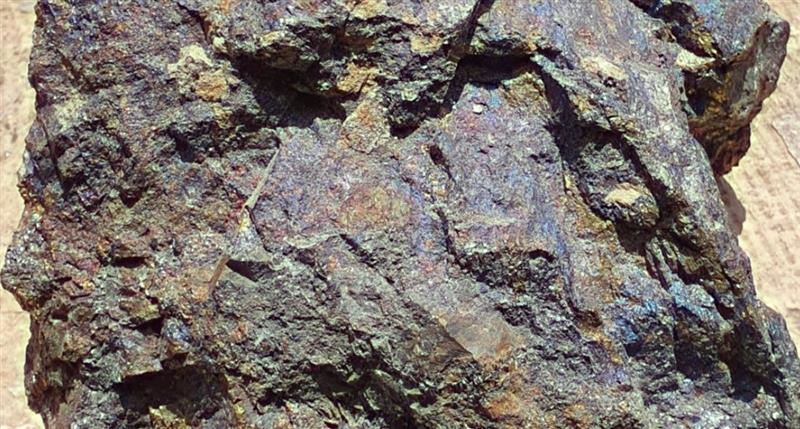
What makes this update notable is the shift in focus. Rather than only talking about digging up material, the company is now working through how that material actually gets turned into something usable. Its plan keeps mining activity at Norra Kärr limited to crushing, grinding and magnetic separation, producing a concentrate from a mineral called eudialyte. That concentrate would then travel to a separate, already established industrial site for the chemical processing step, known as hydrometallurgy. This summer the company began sampling its existing drill core to build a higher-grade concentrate for pilot scale testing of that process.
Behind this work sits a research partnership that the Swedish government has decided is worth funding. The company’s Swedish subsidiary is involved in two projects backed by Vinnova, the country’s innovation agency, including a project called SHLENK with the Research Institutes of Sweden focused on managing silicate behavior during processing. That project carries a budget of roughly $155,000 (SEK 1.5 million), part of a broader national program worth more than $7.2 million (SEK 70 million) aimed at strengthening Sweden’s supply of metals and minerals.
The other piece of context is regulatory. Last month Norra Kärr received a 25-year mining lease from the Swedish government, following a recommendation from the country’s Mining Inspectorate. That approval is what allows the company to move from planning toward actual development, and executives have framed it as a step toward becoming the European Union’s first operating heavy rare earth mine.
The numbers behind the project give some sense of why it has drawn attention. A 2021 preliminary economic assessment estimated average annual production of 248 tonnes of dysprosium oxide, and independent research from Edison Investment Research has pointed out that figure sits close to current European demand, estimated at between 180 and 200 tonnes per year. In other words, a single Swedish deposit could theoretically supply a meaningful share of what the region currently needs, assuming financing, permitting and technical work all continue to line up.
None of that makes the outcome certain. Leading Edge Materials carries a market capitalization of roughly $55 million, and projects at this stage still depend on further studies, capital raises and the kind of hydrometallurgical validation that has not yet been proven at scale for this specific ore body. Silicate management, the technical problem the SHLENK project is trying to solve, has tripped up eudialyte processing efforts elsewhere in the past.
What the announcement really reflects is a broader pattern playing out across Europe right now. Governments that once treated critical minerals as a background issue are now funding the unglamorous middle steps of the supply chain, the part between digging and manufacturing that China has quietly dominated for decades. Whether Norra Kärr becomes a working mine or stays a promising deposit will depend on execution over the next several years, but the direction of the policy support behind it is not really in question anymore.
