
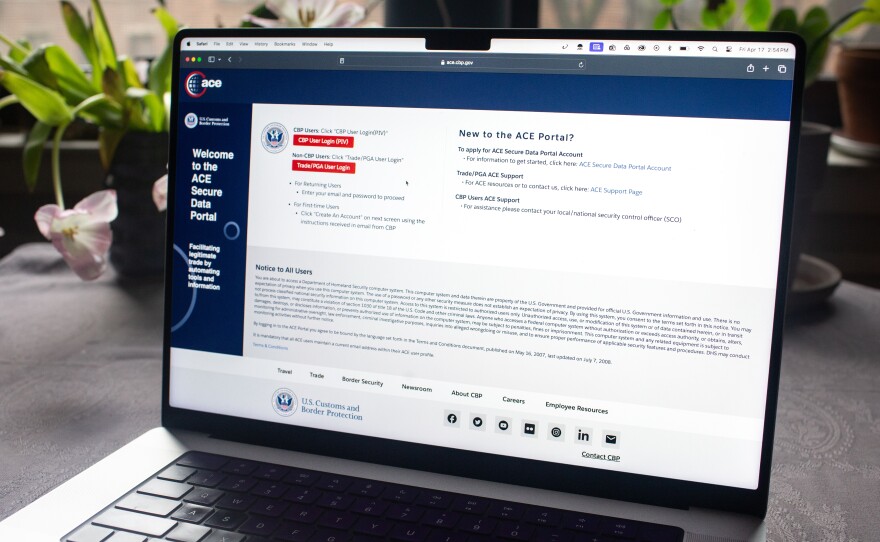
In the spring of 2026, U.S. importers suddenly find themselves holding a digital pen rather than a stack of paper invoices. The Trump administration has launched a new online portal through which companies can ask for refunds on tariffs later ruled unlawful by the U.S. Supreme Court, opening a financial channel that could funnel roughly $127 billion back into the economy from an underlying pool of about $166 billion in contested duties. For the first time, businesses that shipped goods into the United States during the height of those tariffs can systematically request to have those payments reversed, rather than waiting for court cases to play out.
The refund system is run by U.S. Customs and Border Protection (CBP) and is built on a technology platform called the Consolidated Administration and Processing of Entries (CAPE), which lives inside the agency’s existing Automated Commercial Environment (ACE) portal. Importers or their customs brokers log in, submit a claim tied to specific shipments, and then CBP recalculates duties as if the contested International Emergency Economic Powers Act (IEEPA) tariffs had never existed on those entries. The agency expects most approved claims to turn into electronic payments within 60 to 90 days after a refund request is accepted, giving businesses a predictable but not immediate path to recovery.
For large logistics and retail players, the stakes are particularly high. FedEx Corporation (NYSE: FDX) has publicly stated that if it recovers money from the government, it intends to pass those tariff refunds on to the shippers and consumers who ultimately paid them, signaling that some downstream customers may see credits or lower invoices later in the year. Costco Wholesale Corporation (NASDAQ: COST) has also been vocal, telling investors it may lower prices for shoppers if tariff repayments materialize, a move that could soften any lingering price hikes that were passed on when the tariffs were in force.
Those companies are part of a broader wave of more than 3,000 importers that have already sued the U.S. government over the same tariffs, seeking to claw back costs from what they now see as an overreach of presidential authority. CBP has indicated that over 330,000 importers paid on roughly 53 million shipments, giving the refund machinery a massive volume of claims to work through, even in its initial phase. The agency has emphasized that refunds will not arrive automatically; businesses must file eligible claims through the CAPE system and have their electronic payment details properly set up, or they risk delays or rejected entries.
For many smaller firms, the practical challenge is less about the legal arguments and more about paperwork and timing. Consultants and trade lawyers have warned that importers will need to carefully track entry numbers, liquidation dates, and tariff line items to avoid having entire claims thrown out because of a missing reference or an incorrect code. The process is being rolled out in stages, with early CAPE functionality focusing on the most recent tariff-charged entries, while more complex or older claims may be handled in later phases. That layered rollout means that even if a company files on day one, the refund itself may not show up in its bank account until mid summer or later.
Beyond the balance-sheet numbers, the portal creates a subtle follow-on question for executives and finance teams: how much of these refunds, if any, will actually flow through to consumers. When a retailer or carrier absorbs higher tariffs, it often raises prices or surcharges, meaning the economic burden lands on end buyers rather than on the importer alone. If part of the goal is to restore normal pricing, the real impact will depend on how many companies choose to return those tariff dollars to customers, versus keeping them as margin or using them to offset past losses.
For readers watching the trade and supply-chain landscape, the tariff-refund portal is less a one-off event than the start of a longer, quieter cleanup phase. After months of legal uncertainty and abrupt policy changes, the system introduces a more structured way to unwind a portion of that disruption, even if the underlying political debate over executive power and tariffs is far from settled. The next few months will show not only how quickly money moves back into company accounts, but also how those companies choose to handle the money once it arrives.
