
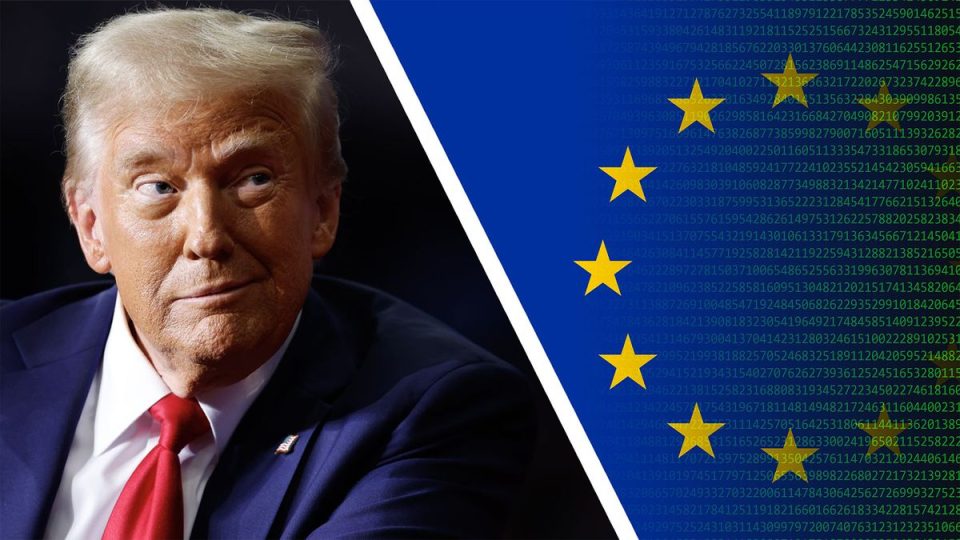
The Trump administration’s recent warning to the European Union marks a sharp turn in long-simmering disputes over technology rules. Yesterday the Office of the United States Trade Representative posted a direct message on social media, calling out what it sees as unfair treatment of American tech firms and threatening fees or restrictions on European service providers. This move names specific companies like Accenture plc (NYSE: ACN), DHL Group (XETRA: DHL), SAP SE (XETRA: SAP), Siemens AG (XETRA: SIE), and Spotify Technology S.A. (NYSE: SPOT), companies that have built substantial operations in the U.S. market without facing similar hurdles. The statement underscores years of frustration, noting that U.S. firms provide free services to EU citizens and support over $100 billion in direct investment there, yet encounter fines, taxes, and litigation.
Europe’s approach stems from a drive for digital sovereignty, embodied in laws like the Digital Markets Act (DMA) and Digital Services Act (DSA), both now fully enforced. The DMA targets large “gatekeeper” platforms, mostly American ones such as Alphabet Inc., Apple Inc., Amazon.com, Inc., and Meta Platforms, Inc., with rules against self-preferencing and demands to share data with rivals. The DSA focuses on content moderation, requiring platforms to combat illegal material like hate speech or disinformation, which has led to recent penalties including $141 million (120 million euros) on X for transparency failures and billions more on Google for ad tech issues. EU officials view these as essential for consumer protection and fair competition, celebrating them as tools to curb Big Tech dominance without major concessions in recent U.S. tariff talks.
From the U.S. side, these rules look discriminatory, applying strict obligations only to designated non-EU firms while sparing local competitors. American tech leaders and officials argue the DMA and DSA impose heavy compliance costs that slow innovation and favor European rivals, with fines totaling billions over the past decade on privacy, antitrust, and tax grounds. President Trump has voiced this directly, warning Europe to tread carefully after the X fine, and his administration sees the laws as barriers to digital trade in violation of prior agreements. Groups like NetChoice call the DMA a blueprint for global regulatory copycats, hurting U.S. exports and jobs.
The named European firms highlight the potential for tit-for-tat measures. Accenture thrives on U.S. consulting contracts, while DHL and SAP rely on transatlantic logistics and software sales. Siemens and Spotify Technology also benefit from open U.S. access, with Spotify facing its own DMA scrutiny in Europe. U.S. officials point out that European companies operate freely stateside, so reciprocity should follow; otherwise, tools like Section 301 tariffs from past disputes could return. Recent EU probes into Microsoft and others add fuel, as does the suspension of a U.S.-U.K. tech pact.
Both sides face real risks in this standoff. Europe worries about losing AI and growth momentum if rules soften, while the U.S. fears eroded competitiveness for its tech sector, which drives global standards. Talks have yielded 15% tariff deals but left digital issues unresolved, and Brussels vows to defend its autonomy. Firms on both continents navigate uncertainty, with compliance diverting resources from expansion. Investors watch closely, as prolonged tension could ripple through supply chains and markets already strained by trade frameworks in flux.
This exchange tests the balance between regulation and open markets, with no quick resolution in sight. Companies adapt amid probes and threats, while leaders weigh sovereignty against economic ties that have underpinned alliance for decades. The path forward hinges on dialogue, but recent rhetoric suggests more friction before compromise.
