
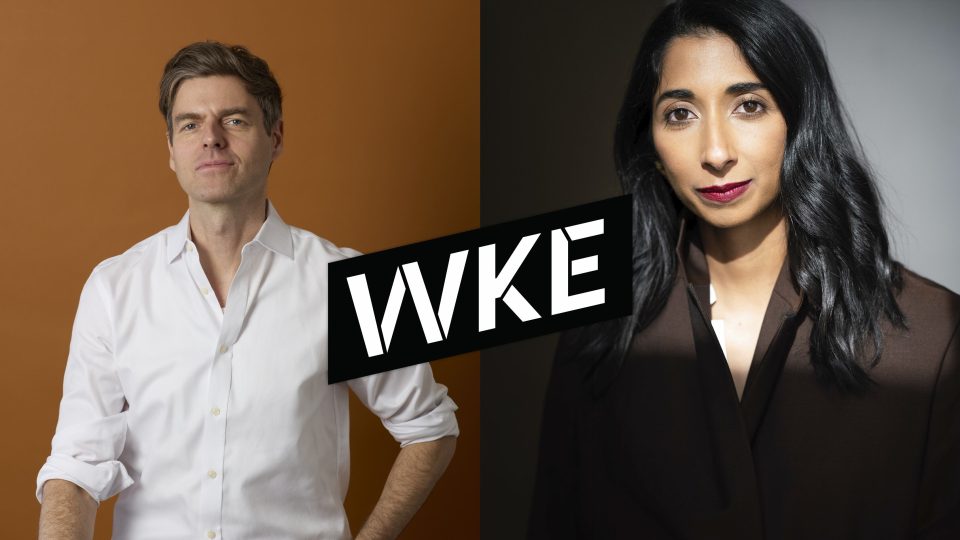
Advertising agencies usually make the short films that play between television shows, not the shows themselves. One of the most celebrated independent agencies in the business now wants to make both. Wieden+Kennedy, based in Portland, Oregon, has launched a division called Wieden+Kennedy Entertainment, or WKE, to develop, finance and produce film and television projects.
The launch became official the end of last month, although the division had been taking shape quietly for several years. It first surfaced publicly in September, in a Deadline story about an independent film. Three people lead it: Nick Setounski, the agency’s global head of production; Karl Lieberman, its global chief creative officer; and Lakshmi Iyengar, a Los Angeles producer who has worked in studio development and spent time as an agent at CAA.
The division has two jobs. The first is to develop and invest in original entertainment that has nothing to do with advertising. The second is to help the agency’s clients make films and series that go beyond the usual branded content or product placement. Setounski put it bluntly to Ad Age: “A lot of branded content just sucks.” The goal, according to the agency, is for a brand’s role to feel natural to the story rather than added on later.
The first project is Porto Rico, an independent historical drama described as a Caribbean western. It marks the feature directing debut of René “Residente” Pérez Joglar and stars Bad Bunny, Viggo Mortensen and Edward Norton. The story is inspired by José Maldonado Román, a Puerto Rican revolutionary known as Águila Blanca, and his fight against colonialism around the time the U.S. took Puerto Rico from Spain in 1898. The film is shooting in the Dominican Republic. WKE is a strategic partner and executive producer, alongside filmmaker Alejandro G. Iñárritu.
Choosing that film was a deliberate exercise. The team reviewed around 80 possible projects. Setounski, Iyengar and Lieberman each listed their 100 favorite movies, then used AI to find common themes. The answer was a shared taste for bold, artistically challenging stories about conflict, authenticity and ambition, and that taste is now the filter for future projects. Setounski eventually expects a slate of roughly 10 original projects.
This is not the agency’s first try at entertainment. It began making original content under the name W+K Entertainment in 2001. Early work included a television series about street basketball, a documentary about Brazilian soccer players called Ginga, and Road to Paris, which followed Lance Armstrong’s path to his third Tour de France win. In 2009, filmmaker Aaron Rose relaunched its internet radio station as a content platform and production house.
The timing reflects changes on both sides of the screen. Brands are looking for alternatives to traditional marketing, and studios and producers have become more open to brands taking part in financing and development. Other agencies have financed or produced films before, and the agency Known has expanded through its Known Originals arm.
Japan offers a much older version of this model. Many Japanese films are funded through production committees, which typically bring together broadcasters, film distributors, publishers, and advertising and talent agencies, with each member sharing in any profit. In 2006, the agency businesses now owned by Dentsu Group Inc. (TSE: 4324.T) and Hakuhodo DY Holdings Inc. (TSE: 2433.T) partnered to finance and promote the Studio Ghibli film Tales From Earthsea.
The new venture also arrives after a hard stretch for the agency. In February 2024, it cut 20% of the staff in its Portland office after losing several major clients. For now, the original content team will stay small, while branded projects can draw on the agency’s larger pool of creatives and strategists. Leaders say they plan to stay selective, because films and series can take years to reach the screen.
The real test will come when the lights go down in a theater. Audiences buying a ticket for Porto Rico will not care which agency helped make it. They will only care whether the story holds them. If it does, Wieden+Kennedy will have made a film people chose to watch, something no commercial ever could.
