
Animation is one of the fastest-growing areas of the global media business, with revenue projected by Precedence Research to rise from about $460 billion in 2025 to roughly $770 billion by 2030 and approach $950 billion by 2035. Other firms, including The Business Research Company and Research and Markets, similarly estimate that the sector crossed $400 billion in the early 2020s and is heading into the high hundreds of billions by the end of the decade. Growth is being driven not just by blockbuster films, but by streaming content, short-form video, advertising, and educational media. At the same time, consolidation is accelerating, as larger companies acquire studios, content libraries, and production tools to control more of the value chain and spread costs.
Streaming remains a primary catalyst. As audiences shift away from traditional television, platforms need a steady pipeline of content to retain subscribers and drive engagement. Animation is well suited to this demand because it can be produced at varying budget levels, adapted across formats, and localized efficiently for global audiences. A single animated property can extend across films, series, games, and social media, offering longer monetization cycles than most live-action projects. This scalability has made animation an increasingly important contributor to overall entertainment revenue in major markets.
Technology is also reshaping production. AI-assisted tools are beginning to streamline tasks like storyboarding and background design, while real-time rendering and cloud-based workflows enable collaboration across global teams. Studios can now tap into talent pools in markets such as India, France, and Australia with fewer logistical constraints. These efficiencies, combined with rising demand, underpin forecasts calling for annual growth rates of roughly 10–12% through the decade.
Behind the scenes, consolidation is intensifying. Larger visual-effects and animation firms are acquiring smaller studios to expand capabilities and client rosters, while media conglomerates are integrating production and distribution. In 2025, India’s Phantom Digital Effects acquired Milk VFX and Lola Post, strengthening its position in high-end global production. These moves reflect a broader shift toward scale, where integrated workflows and international reach provide a competitive edge.
Canada has also seen notable activity. Blue Ant Media acquired Thunderbird Entertainment and completed a reverse takeover of Boat Rocker Media, reshaping its portfolio of animation and live-action IP. Transactions like these highlight a key trend: companies are no longer just buying individual projects, but entire ecosystems, studios, libraries, and distribution channels, to control content from creation to audience delivery. Meanwhile, major streaming platforms such as Netflix and Crunchyroll continue to license and acquire animation directly, reinforcing concentration among leading distributors.
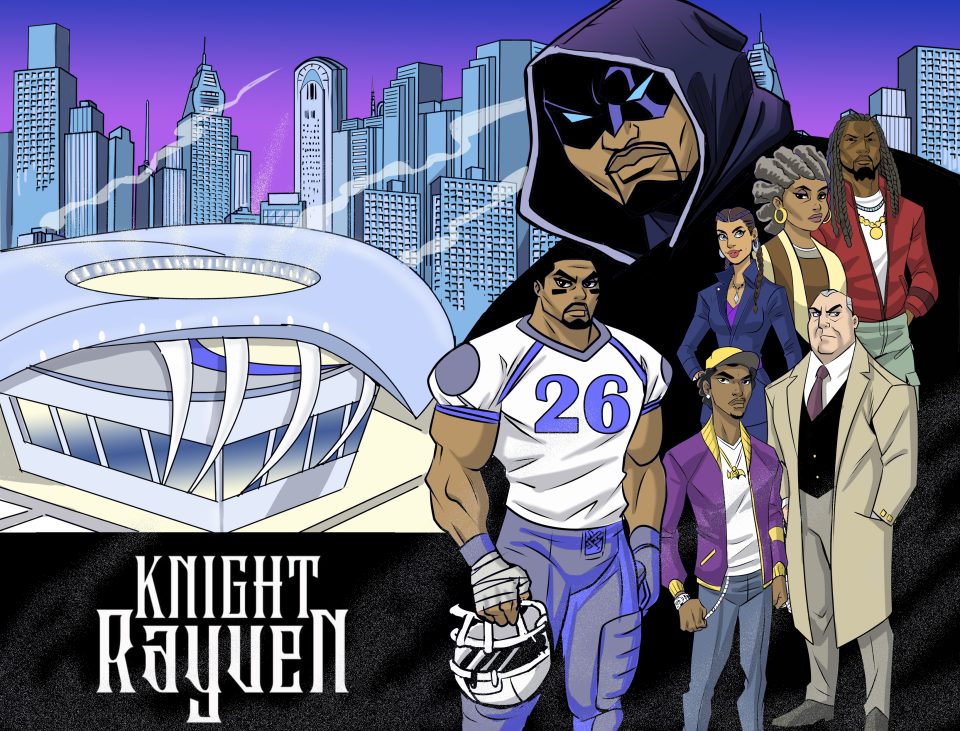
Layered on top of that broader trend is the story of VYRE Network (OTC: VYRE), a free global streaming platform that has focused on emerging filmmakers, athletes, and independent creators. In March VYRE announced a strategic partnership with Unlikely Group of Misfitz and No Excuses Productions, which launched with the debut of Knight Rayven, an animated superhero action series starring NFL Hall of Famer Ray Lewis. The Knight Rayven origin story started streaming yesterday and is available free on the VYRE app and website across a range of devices, including Apple TV, Samsung TV, Roku, Amazon Fire TV, and mobile platforms.
From a business-model perspective, Knight Rayven is less about immediate box-office returns and more about building a recognizable IP around a well-known athlete, then tying that IP to a distribution platform that can host both the show and related content. Because VYRE is ad-supported and free, the focus is on audience reach, watch time, and the ability to reuse the same characters and storylines across multiple formats, rather than a single theatrical release. That approach mirrors a broader pattern in the industry: smaller players are using animation to build low-cost, high-visibility properties that can be tested directly with audiences, then scaled up if they show traction.
On the global stage, dominant players still shape much of the industry. The Walt Disney (NYSE: DIS) continues to leverage decades of animation franchises, while Warner Bros. Discovery (NASDAQ: WBD) builds on its DC and Looney Tunes properties. In Japan, Toei Animation Co. (TYO: 4816) remains a powerhouse behind globally recognized franchises like One Piece and Dragon Ball. At the same time, thousands of smaller studios and independent creators are emerging, particularly on platforms like YouTube, where short-form animation can evolve into larger opportunities through licensing or acquisition.
The animation industry in 2026 resembles a layered ecosystem rather than a top-heavy studio system. Large conglomerates, VFX specialists, independent creators, and streaming platforms are all competing for attention in a crowded but expanding market. As consolidation continues, companies that can move quickly, extend IP across formats, and adapt to new production technologies are likely to outperform.
