
For most air travelers, internet connection quality has often been a test of patience. Streaming a movie or connecting to a video call at 35,000 feet remains a reminder of how distance can still limit the experience. Yet, U.S. airlines are investing heavily to change that reality, with new technology partnerships signaling how seriously they now treat connectivity as part of their service infrastructure.
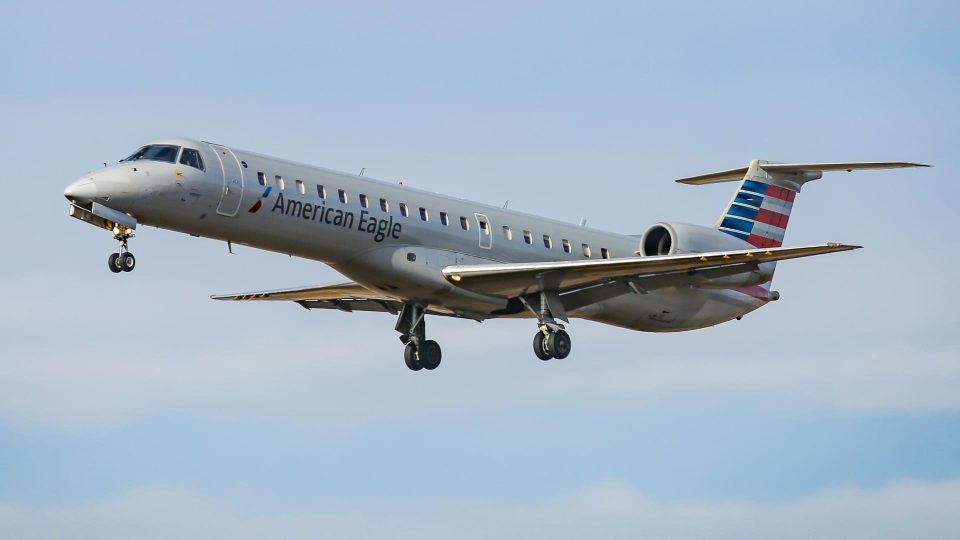
American Airlines (NASDAQ: AAL) is among the carriers leading this transformation. The company is in discussions with SpaceX to use its Starlink satellite network for faster in-flight Wi-Fi. The airline is also reportedly exploring a similar arrangement with Amazon (NASDAQ: AMZN) for its low-Earth-orbit, or LEO, satellite system. These discussions reflect how satellite internet providers are reshaping the economics of aircraft connectivity, moving it from a premium amenity to an expected service.
LEO networks, unlike traditional geostationary satellites that orbit far from Earth, travel in lower orbits, allowing signals to travel shorter distances and reach planes with less delay. Starlink’s network is already used by Hawaiian Airlines (NASDAQ: HA) and JSX, a regional U.S. air carrier, both of which have reported much higher reliability and speed in early trials. Amazon’s upcoming Project Kuiper is anticipated to join that competition soon, targeting similar performance with slightly different satellite configurations.
Delta Air Lines (NYSE: DAL) has already made free Wi-Fi a standard for its passengers on nearly all domestic flights, using Viasat Inc. (NASDAQ: VSAT) as its main provider. The company described the move as a way to give travelers the same digital freedom in the air that they have on the ground, part of a broader plan to integrate in-flight access with Delta’s loyalty program. United Airlines (NASDAQ: UAL) has similarly committed to major network upgrades, recently announcing that more than 80% of its fleet now provides high-speed service capable of supporting streaming and VPN use. Both moves signal that reliable Wi-Fi has become part of how airlines compete for passenger loyalty (Reuters).
For airlines, the challenge is balancing speed and consistency with cost and equipment size. Satellite antennas on narrow-body planes, which fly shorter routes and account for most domestic flights, must be smaller and lighter than those on wide-body aircraft. New technology has resolved part of that trade-off, enabling Wi-Fi systems that are more efficient and less power-intensive, even for older aircraft models.
American’s consideration of bringing back seatback screens ties into this larger shift. The company removed the screens almost ten years ago, assuming passengers would prefer streaming to personal devices. That decision saved weight and fuel costs but also drew mixed reactions from travelers who preferred the simplicity of built-in entertainment. Now, as airlines seek to pair stronger Wi-Fi with richer entertainment options, incorporating interactive screens could fit both passenger demand and commercial opportunity. American has reportedly discussed possible content deals with Amazon for Prime Video integration and e-commerce links, echoing its existing partnership with Apple (NASDAQ: AAPL) to stream Apple Music and Apple TV+ originals.
The economics are not insignificant. Reintroducing screens on hundreds of narrow-body aircraft could take several years and cost hundreds of millions of dollars. But industry analysts point out that onboard screens generate data and advertising revenue opportunities, allowing airlines to offset installation expenses through consumer engagement and partnerships. United and Delta, for example, have already integrated sponsored content and targeted offers into their onboard systems, marking a subtle but important shift from passive to interactive in-flight media models.
Several foreign carriers are following similar trends. Lufthansa (XETRA: LHA) and Emirates are improving connectivity through global satellite operators like Inmarsat and Panasonic Avionics, signaling that competitive passenger expectations are global. The line between airline and tech company continues to blur, as carriers adopt software, data analytics, and media integration to keep passengers connected for work or leisure.
The gradual modernization of in-flight connectivity mirrors a wider reality in commercial aviation: passengers no longer measure flight comfort only in legroom or meal quality. They measure it in megabits per second. As satellite technology matures and competition among providers intensifies, the comfort of staying connected may soon become as standard as the seat belt sign.
