
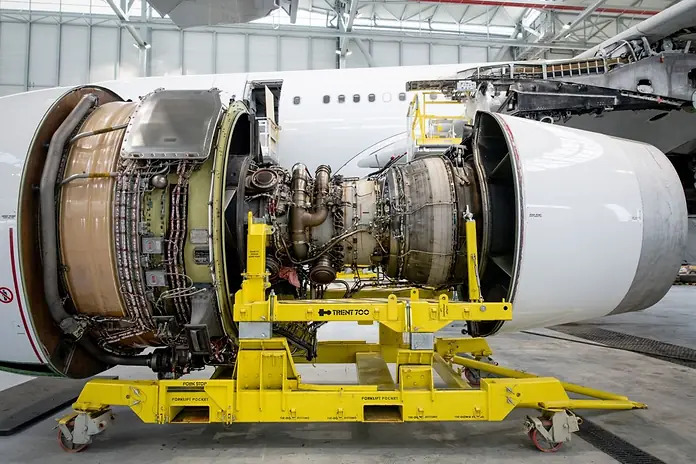
A parked airplane earns nothing, but the engines hanging from its wings can earn a small fortune. That simple fact sits behind a strange trend in aviation, where jets only a few years old are being stripped down and crushed instead of sent back into the sky.
The numbers explain the temptation. The A320neo, a workhorse jet from Airbus SE (EPA: AIR.PA), flies with engines from two makers. Pratt & Whitney, a unit of RTX Corporation (NYSE: RTX), builds one version, and IBA Group, an aviation advisory firm, says the top of its value range is close to $17 million this year, up 60% from 2019. Renting one costs between $160,000 and $180,000 a month. The rival version from CFM International rents for between $130,000 and $180,000.
How did supply get so tight? In 2023, Pratt & Whitney recalled engines after finding contaminated powdered metal in some parts. Inspections clogged repair shops, and hundreds of Airbus planes were grounded around the world. Reuters reports that these engines power at least 40% of A320neos in service. Air Cargo Week adds that shop turnaround times have reached record highs, adding two to four months to earlier waits.
Nowhere in the U.S. did that engine problem hurt more than at Spirit Airlines, and then the company collapsed. The budget carrier stopped flying in early May with 114 Airbus A320 family jets, 66 of them leased, according to Reuters. Owners faced a choice for a large group of late-model aircraft: keep waiting, sell the plane whole, or take it apart.
Teardowns are already happening at an unusual age. IBA counted 21 newest-generation aircraft dismantled from June 2025 through August, with an average age of 6.4 years. Narrow-body planes usually retire at about 21.7 years. Air Cargo Week reports that two A320neos built for Spirit, between 3.5 and 4 years old, were bought for full teardown, among the youngest ever dismantled.
One buyer was EirTrade Aviation, which bought two of those jets in February. Bill Thompson, who leads its acquisitions for the Americas, said it was the first time in his career he had purchased a plane less than five years from its build date. The company paid single-digit millions for each and expects to profit from more than 1,000 parts pulled off them.
For owners, the decision comes down to patience. Storage costs money, and a plane waiting on engines or parts can sit for years. Dave Querio, CEO of Ascent Aviation Services, says he has not seen this volume of young aircraft torn down before. Simon Goodson, CEO of AerFin, tells his traders not to “fall in love with the metal.”
Engines are only the start. Scott Butler of KP Aviation told Reuters that landing gear, flight controls and auxiliary power units also draw buyers. His blunt summary: “There’s a lot of money in the engines.” What remains, according to AeroDynamic Advisory partner Mike Stengel, is a metal shell that gets crushed and sold to recyclers.
Not every Spirit jet will meet that fate. In late June, CNBC found dozens of idle yellow planes stored at a Goodyear, Arizona, facility belonging to AerSale Corporation (NASDAQ: ASLE). Some planes may stay in desert storage, where dry air slows corrosion, while others could fly for new airlines that swap out the 28-inch seat pitch for something roomier.
The collapse did bring some relief. Engines pulled from Spirit jets are being leased to airlines with grounded aircraft, though Reuters notes lease rates have not dropped, which points to limited, temporary help. Air Cargo Week stresses the bigger limit: a liquidation can supply engines and parts, but not repair shop labor, test equipment or open slots.
The lesson is simple. While repair shops stay clogged, a plane’s worth depends less on its age and more on whether anyone can get its engines running. Until that changes, more airliners built to fly for decades may end up as spare parts.
