
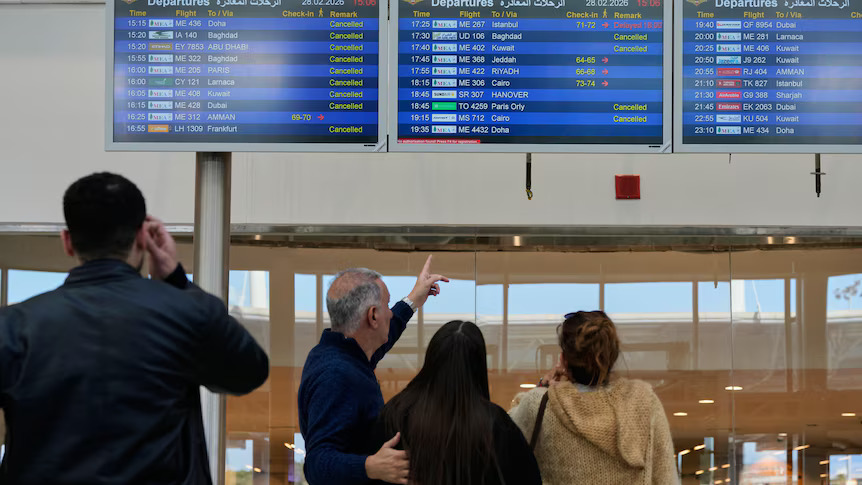
Recent military actions between the U.S., Israel, and Iran have closed large sections of Middle Eastern airspace. Airlines must now cancel flights or reroute around these zones. Travelers in the U.S. and elsewhere feel the impact, even if their trips never touched the region.
Picture this: major airports like Dubai, Doha, and Abu Dhabi serve as busy stops for journeys from Europe to Asia. Since the attacks began, over 20,000 flights in and out of the Middle East have faced cancellation. That number comes close to reports of 21,300 disruptions at seven key airports alone. More than a million people have dealt with these changes, from missed connections to days stuck in terminals. Airlines such as Emirates and Qatar Airways cut back services to dodge the danger zones.
In the U.S., the fallout shows up in longer wait times and higher ticket prices. Flights that once crossed Gulf skies now curve around them, burning extra fuel and adding hours to trips. A route from New York to Singapore might pick up two or three hours, and seats fill up fast as options shrink. Business travelers heading to meetings in Asia or Europe often reroute through less crowded hubs like Istanbul. This squeezes schedules and budgets for companies relying on quick global hops. East Coast to West Coast connections sometimes delay too, as crews and planes get held up overseas.
Globally, the picture grows even wider. Airspace closures stretch from Iran to neighboring countries, pinching the narrow paths left after earlier issues like the Russia-Ukraine war. Europe to India flights stretch out by 10% or more in flight time. African routes feel the pinch too, with connections through the Gulf adding unexpected layovers. Tourism takes a direct hit: arrivals to places near the conflict could drop 11% to 27% this year. Israel has seen tourism shrink by up to 80% in tense periods, with pilgrimage sites and beaches emptying out. Even spots like Jordan face risks from nearby unrest, as tour groups cancel en masse.
These events fit into a larger pattern this year. Conflicts keep popping up, and each one sends waves through travel plans. People far from missiles or drones still book fewer trips due to worry over headlines. Governments issue warnings that make companies rethink staff travel to anywhere vaguely connected. Hotels and tour groups in unaffected areas see last-minute pullouts from cautious executives. The result? A global industry that thrives on steady flow starts to stutter, with ripple effects on jobs from pilots to hotel staff.smartraveller.gov+1
Take the economics: airlines face higher costs from detours, passing them to passengers. A ticket that cost $800 might jump 20% or more as demand chases fewer seats. Stranded tourists share stories of sleeping in airports or scrambling for repatriation flights. One French family transiting through the Gulf to Thailand found themselves stuck, unable to get kids back to school on time. Crews and planes scatter too, slowing recovery and creating backups worldwide.
Tourism and aviation tie into bigger economies. Gulf hubs push to diversify beyond oil, but closures remind everyone how fragile that shift can be. Long term, airlines might build more direct routes or lean on new paths through Central Asia. Travelers grow savvier, buying flexible insurance and eyeing stable spots like Southeast Asia instead. Conflicts like this one remind us that modern travel links us all in ways we often forget.
