
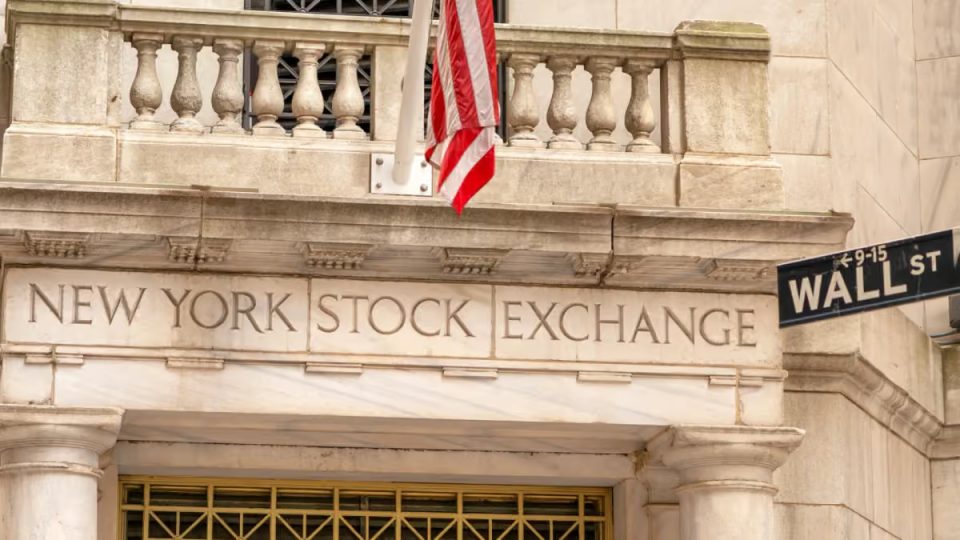
Most people never think about what happens after they click buy on a stock. The trade feels instant, but the record keeping behind it, known as clearing and settlement, still takes a full business day to finish in the U.S. That back office is where one of the more interesting changes in finance is now taking shape. Yesterday Ava Labs, the company that develops the Avalanche blockchain, announced in an official press release that a planned New York Stock Exchange venue for tokenized securities will use Avalanche as the core ledger for clearing and settlement. The NYSE backed the news in its own post that day, and its chief product officer told The Wall Street Journal that Avalanche was chosen after the exchange tested several providers. AVAX, the network’s native token, climbed roughly 8% after the news.
A tokenized security is an ordinary share or fund unit whose ownership record lives on a blockchain instead of only in a traditional database. The NYSE first described its plans in January: a platform for trading and on-chain settlement of tokenized U.S. stocks and exchange-traded funds, pending regulatory approval. The setup splits the work in two. The exchange’s existing Pillar matching engine will still pair buyers with sellers, while Avalanche will provide the ledger the venue’s clearing firm uses to record and settle those trades. Dennis Lee, the NYSE’s head of digital issuance, said the exchange wanted that ledger to offer speed, reliability, predictable costs and control over who can take part. Avalanche will not be the only network involved, though, since the venue is meant to accept stocks issued on several different blockchains. The design also calls for trading at any hour, orders sized in dollars rather than whole shares, and funding through stablecoins, which are digital tokens pegged to the U.S. dollar.
The selection did not come out of nowhere. In September, Michael Blaugrund, who heads strategic initiatives at Intercontinental Exchange, Inc. (ICE) (NYSE: ICE), the NYSE’s parent company, said Avalanche “checks a lot of those boxes.” Ava Labs added that the exchange had spent about a year testing the technology. ICE has lined up other partners too, including tZERO as a design partner and Securitize Corp. (NYSE: SECZ) as a digital transfer agent. Rivals are moving as well, with Nasdaq, Inc. (NASDAQ: NDAQ) and the Depository Trust and Clearing Corporation building tokenization systems of their own. The appeal is easy to see. A record that every party shares means less time spent reconciling separate books, and it could shrink settlement from a day to something close to instant.
For the crypto industry, the news matters beyond one token’s price move. A growing group of smaller listed companies make their living building blockchain infrastructure or holding crypto tokens on their balance sheets, a model often called a digital asset treasury. Their business case rests on the idea that blockchains will eventually carry real financial activity, not just speculation. When the world’s largest stock exchange decides to run settlement on a public network, that idea gains some credibility, and it gives these companies a concrete example to point to when they explain what they do.
There are good reasons to keep expectations measured. The platform is not live and still needs regulatory approval. A Securities and Exchange Commission exemption issued in September opened the door to some on-chain trading of tokenized stocks, but that is not the same as approval for this venue. Crypto prices also remain volatile. Even after its jump, AVAX was trading about 52% below its level a year earlier. Companies that hold a single token can swing far more sharply than the token itself, and many of them trade on thin volume.
What happens next will come down to approvals, launch dates and whether large issuers and brokers actually show up. If they do, the NYSE will have shown that a public blockchain can sit quietly inside the plumbing of mainstream markets. If they do not, this will be remembered as an interesting experiment. Either way, the line between traditional finance and crypto infrastructure got noticeably thinner this week.
