
Rare earth elements sit quietly inside many of the products that define modern life, from smartphones and electric vehicles to guided missiles and advanced radar. They are not actually rare in the earth’s crust, but they are difficult and costly to separate, which makes secure supply a strategic issue for both economic growth and national security. As demand grows for cleaner energy technologies and sophisticated electronics, the question of where these materials come from has become a policy priority in both United States and Canada.
Rare earth elements, a group of 17 metals including neodymium, dysprosium and others, are essential for high performance permanent magnets used in electric motors, wind turbines and many defense systems. These magnets help make devices lighter, more efficient and more powerful, which is why rare earths show up in everything from electric vehicle drivetrains to precision guided munitions.
For years, most mining and processing capacity has been concentrated in China, which controls the majority of global refining and a large share of mined output. That concentration has highlighted a vulnerability for importing countries, since any disruption can ripple through supply chains for clean energy, electronics and defense.
Canada has identified rare earths as part of a broader critical minerals agenda and has published a national strategy that includes support for exploration, project development and downstream processing. Through the Canadian Critical Minerals Strategy and related federal programs, Ottawa has combined funding, permitting support and infrastructure planning to help advance projects in provinces such as British Columbia and Quebec.
In the U.S., federal policy has leaned on tools such as the Defense Production Act to encourage domestic rare earth production and processing, particularly for defense and clean energy applications. Washington has also funded research and early stage projects through agencies focused on energy and national security, with the goal of reducing reliance on imported materials and creating a more resilient North American supply chain.
Defense Metals Corp. (TSXV: DEFN, OTCQB: DFMTF, FSE: 35D) is one example of how this policy backdrop is playing out at the project level in Canada. The company is advancing the Wicheeda Rare Earth Project near Prince George in British Columbia, which recently reached a key technical milestone with the completion of a Pre Feasibility Study. The study supports the case for Wicheeda as a potential new source of rare earths in North America, at a time when governments and manufacturers are actively searching for non Chinese supply.
In 2025, Defense Metals raised approx. $11.8 million (C$16.2 million) in an oversubscribed private placement, providing funding for metallurgical optimization, engineering work and other studies intended to move the project toward a Definitive Feasibility Study targeted for early 2026. This capital came alongside insider participation and open market share purchases by senior leadership, as well as a Letter of Interest from Export Development Canada for potential project financing of up to US$250 million, which together underline how strategic rare earth projects are attracting both public and private financial support.
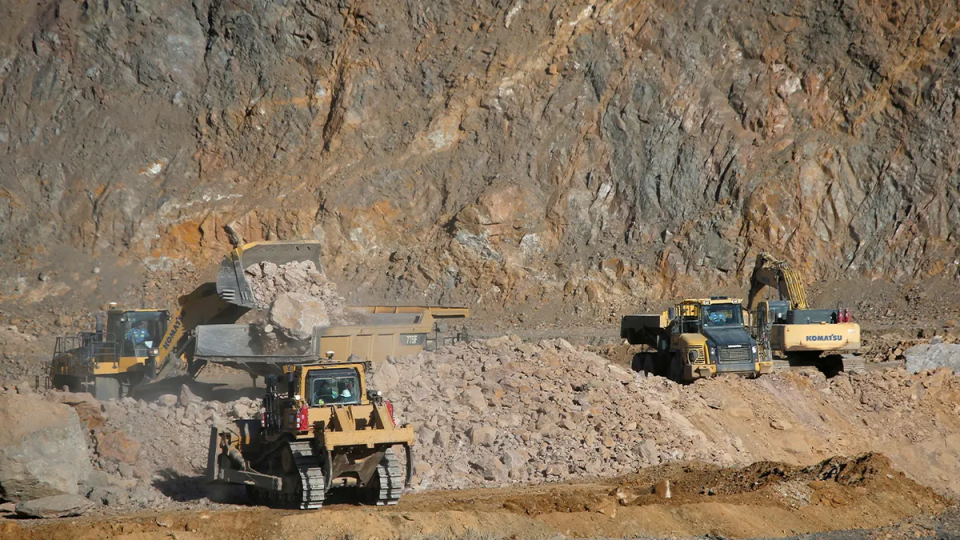
On the U.S. side, MP Materials Corp. (NYSE: MP) operates the Mountain Pass rare earth mine in California, which is currently the only major rare earth mining and processing site in the country. After a long period in which U.S. rare earth production declined, Mountain Pass has been rebuilt with significant investment aimed at restoring domestic supply and expanding processing capacity onshore.
Mountain Pass has benefited from a combination of private capital and public support that aligns with U.S. federal objectives for critical minerals, including initiatives tied to defense procurement and clean energy supply chains. The project illustrates how policy signals, long term offtake contracts and investor interest can come together to revive a strategic mining and processing asset on U.S. soil.
As Canada and the U.S. push forward with their respective critical minerals strategies, projects such as Wicheeda and Mountain Pass highlight how industrial policy, capital markets and resource geology intersect. Canada brings substantial geological endowment and a federal focus on developing both light and heavy rare earth resources, while the U.S. has sharpened its emphasis on national security and industrial resilience.
Rare earth elements have evolved from an obscure technical concern into a core strategic priority that links automotive innovation, energy transitions, technology breakthroughs and defense capabilities. Projects like Defense Metals’ Wicheeda in Canada and MP Materials’ Mountain Pass in the U.S. stand at the forefront, showing how government strategies and private investment can reshape supply chains. Their progress over the next decade will reveal the extent to which North America can build a self reliant rare earth ecosystem, reducing vulnerabilities while fueling economic growth across multiple industries.
