
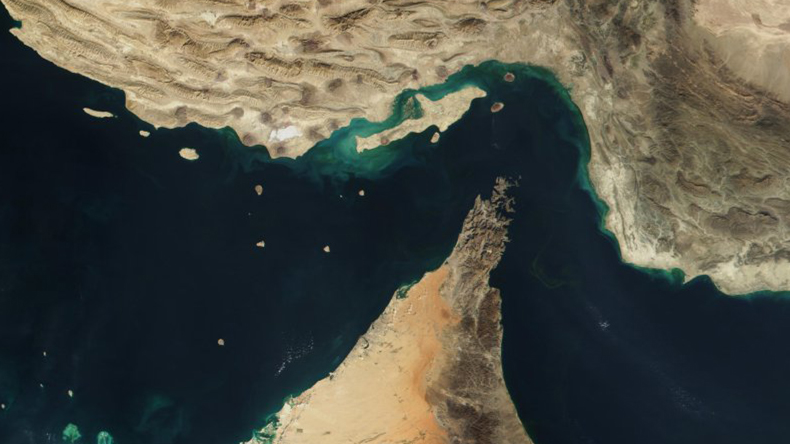
When the Strait of Hormuz started to seize up in late February, the initial story was straightforward: a politically charged chokepoint slams shut, and prices spike. Today a different, more complex picture is emerging, one that JPMorgan’s latest global supply-chain work tries to map. The firm’s follow-up notes show oil-stock stress spilling unevenly across regions, with some pockets of Asia, Africa, and parts of Europe feeling sharper physical shortages or cost pressures, while the U.S. and Canada remain relatively buffered by domestic supply and rerouted flows. That mismatch is what now matters to refiners, shippers, and industrial users, not just headlines about headline prices.
In Asia, the pressure is already the sharpest. JPMorgan’s updated model suggests that regional inventories have slipped by an additional 20–25 million barrels through late March, with India and South Korea still below normal strategic-stock ratios and China drawing more heavily from its state reserves. Japan and parts of Southeast Asia have had to negotiate emergency supply swaps through Australia and Indonesia to keep refiners from burning through crude too quickly. Within the region, about 5 million barrels per day of crude that normally transit the Strait now sits in the crosshairs of interruption risk, and JPMorgan’s April scenario warns that Southeast Asia’s effective demand loss could climb toward 1.5 million barrels per day by mid-April if reserve drawdowns flatten. The Philippines, formally under a national energy emergency, has responded with domestic fuel rationing and partial LNG substitutions, which have helped, but not eliminated, the strain on the system.
Africa is beginning to feel the knock-on effects more clearly as delayed cargoes from the Gulf and India work their way inland. East African refiners, particularly in Kenya and Uganda, have reported lower crude run rates, and Egypt is leaning on Suez Canal storage to steady the domestic market. JPMorgan’s April update raises the region’s projected demand loss to roughly 300,000–350,000 barrels per day for April, up from earlier estimates, underscoring that the shock is moving beyond the Persian Gulf’s immediate neighborhood. Across the broader developing-country universe, the UN Conference on Trade and Development (UNCTAD) has flagged that the Hormuz disruption is now feeding into higher inflation, trade slowdowns, and financial pressure on vulnerable economies, not just an energy-market story.
In Europe, the dominant theme is price exposure rather than outright volume shortages. Refiners there have begun outbidding Asian buyers for North Sea and West African grades, which has helped keep European tanks from falling as sharply as they might have otherwise. JPMorgan notes that mid-April crack spreads are likely to stay elevated even if Gulf flows resume only partially, because the margin structure for European refiners now reflects the higher cost of securing crude away from the Middle East. Germany and France have increased procurement from Norway and the U.S. Gulf Coast, while Mediterranean refiners are leaning more heavily on Libyan crude, a pattern that redistributes flow but does not erase the underlying premium.
North America, taken as a whole, remains the most insulated region. The U.S., Canada, and Mexico can still rely on internal supply balance and the ability to reroute shipments from Latin America, which has helped keep the national crude cushion near the 435 million barrel range even as global stocks tighten. Canada, in particular, has stepped up as a stabilizing supplier, with oil-sands output hitting its highest post-winter level since 2022 and federal energy officials confirming participation in an International Energy Agency-coordinated release of about 2 million barrels. JPMorgan’s latest note also highlights that California’s differential to West Texas Intermediate (WTI) reached a record $7.80 per barrel premium, reflecting logistical bottlenecks and competition from Asian buyers for spot barrels on the West Coast.
In the Middle East, storage and logistics are under strain. Iraq’s onshore storage has stabilized at about five to six days of cover, up from a tighter three-day buffer in March, as some exports are being shifted through Turkey’s Ceyhan terminal. Kuwait and Oman are continuing to rely heavily on floating storage, a sign that physical outlets are still constrained even as production adjustments are being managed. Globally, JPMorgan’s desk estimates that the crude inventory deficit since early March is roughly 180 million barrels, most of it still “on the water” rather than at land-based terminals, which points to systemic tightness rather than a full physical outage.
The broader takeaway for industry-level investors and operators is less about a single black-and-white crisis and more about a layered, geography-driven process. Asia remains the focal point for near-term physical shortages, Africa for downstream disruption, and Europe for price-led risk, while North America and parts of Latin America are managing the stress with more localized logjams. If Gulf transit resumes partially by mid-April and coordinated stock releases continue through the second quarter, the outcome is likely to be “controlled stress” rather than a full-blown systemic breakdown, but the scramble for crude, products, and shipping capacity will continue to shape margins and operating patterns for months.
