
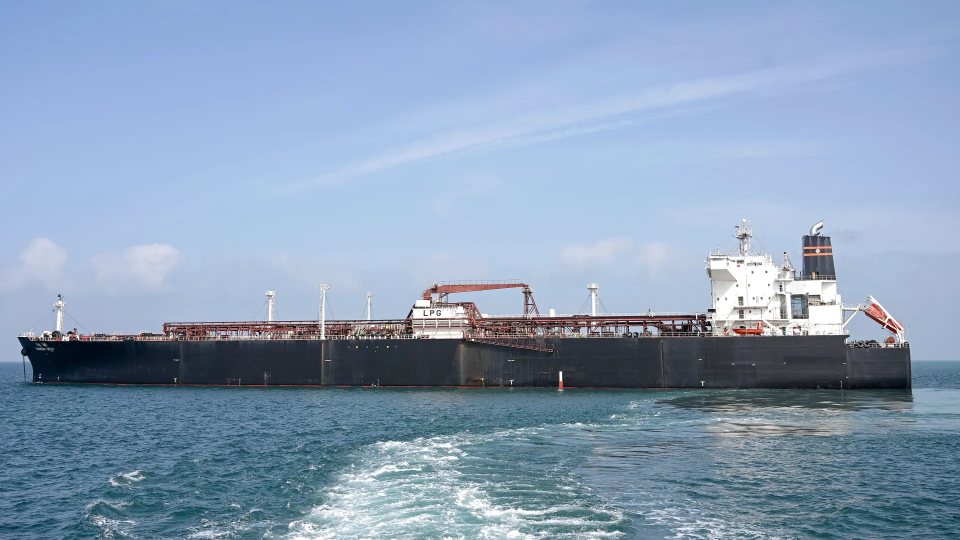
Traffic through the Strait of Hormuz has climbed to its highest level since the early days of the war, but the reality is that this “return” is nothing like the wide-open flow that existed before hostilities broke out. Before the conflict, roughly 107 to 135 commercial vessels would pass through the narrow waterway each day, carrying about one-fifth of the world’s seaborne oil and liquefied natural gas. Today, even a weekend with 21 ships squeezing through feels like a cautious trickle rather than a reopening.
The key difference is not just the number of ships, but who is allowed to move and under what conditions. During peacetime, the strait operated as a largely open corridor, with little more than standard maritime rules and safety protocols slowing anyone down. Now, it has effectively become a permission-based channel, where passage depends on whether Iran has agreed to let a particular vessel or country through, often in exchange for political or economic goodwill.
Among the most visible beneficiaries are countries that Tehran has explicitly labeled as “friendly” or “brotherly.” Iran’s military has stated that Iraq is exempt from shipping restrictions in the Strait of Hormuz, allowing Iraqi-flagged tankers to carry crude out even as most other routes remain closed. Indian-affiliated liquefied petroleum gas (LPG) tankers have also been granted safe-passage agreements, with eight such ships reported to have crossed in recent weeks. For energy-starved governments in Asia, these narrow windows are enough to bring in critical cargoes of fuel, fertilizer, and refined products that would otherwise be stuck in the Persian Gulf.
Other states are working their own channels. Pakistan has reportedly secured an agreement under which Iran will allow 20 Pakistan-flagged vessels through the strait, including two per day, even though the country does not currently have that many ships waiting in the Gulf. That surplus capacity has opened the option for Pakistan to consider re-flagging additional tankers or container ships from other countries so they can ride under the Pakistani banner and get through. Shipowners say that similar quiet arrangements or “slots” may exist for vessels linked to China, Japan, Russia, and other nations, even if the exact terms are never put on paper.
What is clear is that Iran is not simply opening the strait back up so everyone can resume business as usual. Instead, Tehran is formalizing a system of control that includes potential tolls and fees for passage, turning Hormuz into a monetizable chokepoint rather than a neutral transit lane. Iranian lawmakers have advanced a bill that would set up a formal payment system for ships, with some reports suggesting that vessels could be asked to pay for what Tehran calls “safe passage” and regulatory oversight. This legal framework would reinforce Iran’s claim of authority over the waterway, even as it allows a limited number of ships to move through on terms that suit Tehran.
For the rest of the world, the practical effect is that the Strait of Hormuz remains a high-risk, heavily constrained route rather than the open artery it once was. While countries such as India, Pakistan, Iraq, China, and Japan have managed to secure some transits, many others either cannot or will not meet the conditions Iran is imposing. Maritime data show that traffic has risen from a low of just a few ships per day in early March to a modest uptick by early April, but flows are still far below the pre-war pace of about 135 vessels daily. At this point the strait looks less like a fully functioning chokepoint and more like a controlled gate, where a handful of carefully chosen ships slip through while the broader global trade network has to reroute, wait, or pay a premium to get anywhere near it.
