
[stock_market_widget type=”card” template=”basic2″ assets=”TLG.TO” realtime=”true” api=”yahoo-finance”]
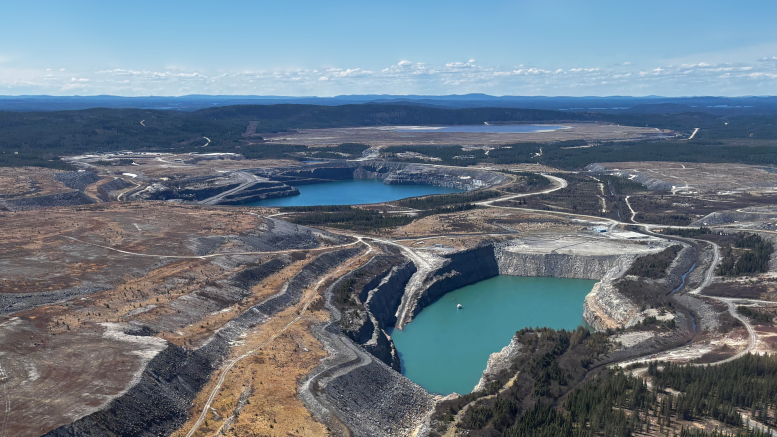
Troilus Mining Corp. (OTC: CHXMF, TSX: TLG) is continuing to refine the Z87 area of its Troilus Project in north central Quebec, Canada, and the latest drill results help explain why the company is spending so much time there. The focus is not on finding a completely new deposit, but on improving the quality of the existing mine model by testing areas that were either lightly sampled or left out of earlier estimates.
The most visible result from the program is an intercept of 1.10 g/t AuEq over 103 metres from hole 87 26 484, including 2.10 g/t AuEq over 34 metres. Another standout interval came from hole 87 26 492, which returned 1.98 g/t AuEq over 14 metres, including 9.87 g/t AuEq over 1.5 metres. A third important hole, 87 26 512, cut 0.92 g/t AuEq over 93 metres, including 2.30 g/t AuEq over 21 metres.[bnnbloomberg]
For readers who do not follow mining terminology closely, AuEq means gold equivalent. It is a way of expressing gold, silver, and copper in one number so that different metals can be compared on the same basis. In this case, the grades suggest that Z87 still contains mineralized material that was not fully captured in earlier modeling, especially in and around the hangingwall, which is the rock above the main ore zone.
That point matters because mine planning depends on more than grade alone. If material that was once treated as waste can be reclassified, the pit shape, mining sequence, and waste removal plan can all change. Troilus says the Z87 optimization work is meant to upgrade inferred material, test unsampled historic intervals, and support potential improvements in strip ratio and early mill feed.
The company has also made clear that this is part of a larger feasibility framework, not an isolated drill campaign. Its May 2024 feasibility study supports a 22 year, 50,000 tonne per day open pit operation at the Troilus Project. That means even modest improvements inside Z87 can matter, because they feed into a broader production plan that depends on reliable ore definition and efficient sequencing.
So far, Troilus has reported 30 drill holes totaling 9,793 metres from the roughly 24,000 metres planned for the Z87 optimization program. The scale of the program suggests the company is still working through a detailed list of targets inside the reserve pit shell, with the goal of tightening the resource model before future mine planning updates.
The practical takeaway is that Z87 is becoming better understood hole by hole. The drill results are not only about grade, they are also about reducing uncertainty in an existing open pit area that already sits inside a larger development plan. For a project at this stage, that kind of incremental progress can be just as meaningful as a new discovery.
