
Oral arguments kicked off Thursday in Washington as the United States Court of Appeals for the Federal Circuit took up the contentious fight over whether President Trump exceeded his legal authority in imposing sweeping tariffs on imports from a wide roster of U.S. trading partners. This latest hearing is the result of lawsuits brought by five small business owners and a coalition of 12 states governed by Democrats, who argue that Trump simply cannot use the International Emergency Economic Powers Act of 1977, known as IEEPA, as his legal basis for a massive set of import duties that touch everything from electronics to raw materials.
The tension in the courtroom was plain. The appellate judges, comprising eight Democratic and three Republican appointees, were direct, even blunt, in their skepticism of the government’s defense. Judges questioned whether the president actually had the authority to use IEEPA to unilaterally launch tariffs. One judge pointed out that the law doesn’t even mention tariffs, and both history and legislative debate show it was meant as a tool for imposing sanctions in international emergencies, not for retooling trade policy on a presidential whim. In nearly 50 years, no president has previously used IEEPA to impose import tariffs.
The Trump administration, represented by attorney Brett Shumate, has argued IEEPA grants a president “extraordinary” power to restrict trade in moments of national peril, including by levying tariffs if it is in the country’s interest. Shumate claimed the law’s text gives the president the ability to “regulate” imports during crises, and that banning goods entirely would also imply the authority to tax them. But this reading was met with considerable doubt. One judge asked, “If the president says there’s a problem with our military readiness and he puts a 20 percent tax on coffee, that doesn’t seem to necessarily deal with it.” The skepticism was palpable.
The legal battle began in May, when the U.S. Court of International Trade agreed with the plaintiffs, ruling that Trump’s tariffs overreached. The court concluded that IEEPA, while intentionally flexible, is not a blank check for implementing trade policy. The ruling found that the specific threats Trump cited, ranging from the nation’s trade deficit to the fentanyl crisis, did not meet the stringent requirements for a national emergency as intended under IEEPA. The court also rejected the notion that economic issues like persistent trade deficits, which have existed for decades, could suddenly qualify as unanticipated emergencies warranting this extraordinary action.
For now, the appellate court has allowed Trump’s tariffs to remain in place while the larger arguments play out, meaning importers and downstream businesses are still facing significant costs. For many small business owners, the pain is real. One entrepreneur noted that tariffs have wreaked havoc on supply chains and reduced their employee’s hours by 40 percent as uncertainty lingers over future production costs. Economists generally agree that, while tariffs function as taxes on imported goods, usually paid by U.S. businesses and ultimately by consumers, they have not yet stoked major inflation. The verdict on long-term effects, however, is still out, and frustration among U.S. importers is mounting as each month passes without resolution.
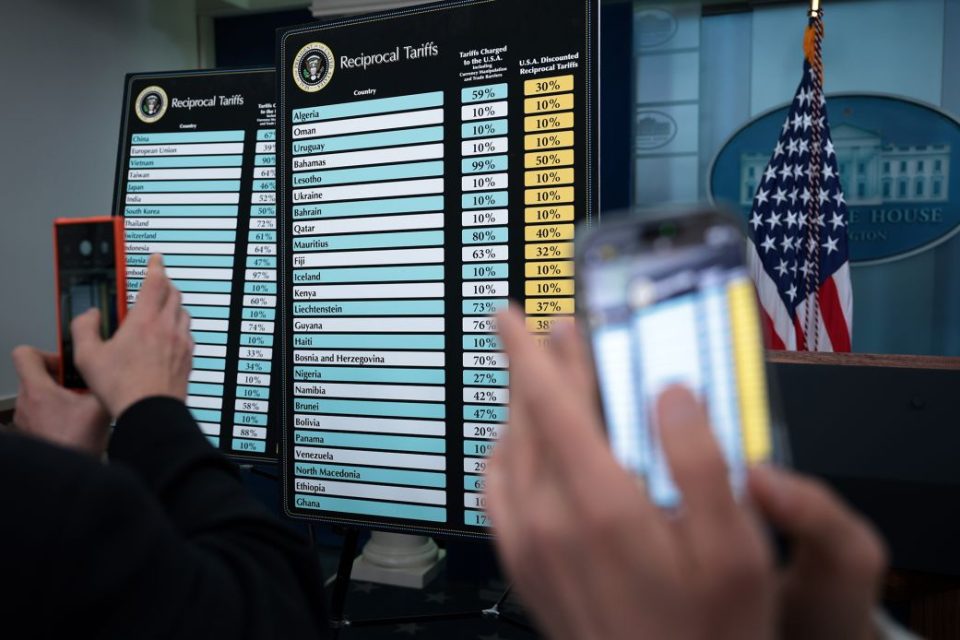
On the policy side, Trump’s defenders argue these levies are critical to leverage negotiations with countries such as China, Mexico, and even U.S. allies in the European Union. Yet, it’s clear the outcome of this appeal could upend many of Trump’s signature economic moves, especially his “Liberation Day” tariffs introduced during his second term. If the higher court upholds the original judgment, most of these tariffs could vanish, though some, like those on steel and aluminum imposed under separate statutes, would remain untouched.
No matter which way the appeals court rules, most legal observers expect the case will land at the U.S. Supreme Court in the coming months. Until then, importers, small businesses, and major trade partners worldwide are left guessing whether America’s tariff regime is here to stay, or about to be dramatically recalibrated.
