
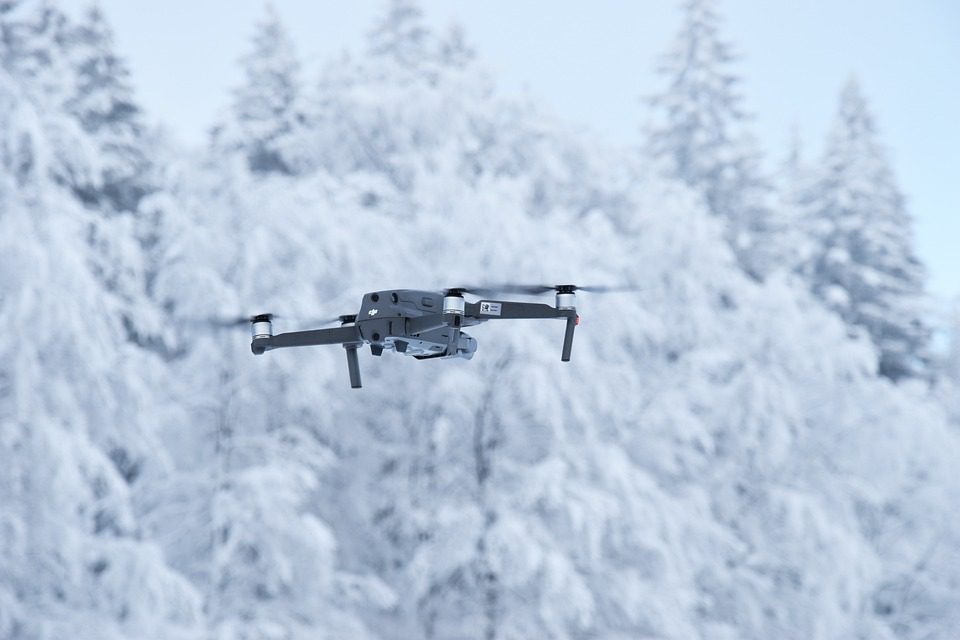
Ice is one of aviation’s oldest problems. A thin coating on a wing or propeller changes how air flows over it, adds weight and can bring an aircraft down. Large passenger planes carry sensors and heating systems to deal with it, but most drones do not. In northern Canada, where cold, moisture and wind arrive together for much of the year, that gap limits when and where uncrewed aircraft can safely fly.
That problem is the focus of an agreement announced today by Volatus Aerospace Inc. (OTCQX: TAKOF, TSX: FLT). Based in Mirabel, Quebec, Canada, Volatus is an aerospace and defense company that works with both piloted aircraft and drones. It builds uncrewed systems, trains operators, integrates aircraft for customers and collects aerial data. Its customers include defense agencies, public safety organizations and industrial operators in fields such as energy and infrastructure.
The drone industry has moved well beyond hobby aircraft and aerial photography. Governments and companies now use uncrewed aircraft for surveillance, inspection and delivery in places that are costly or dangerous to reach. Volatus has been building toward northern work for some time. Earlier this year, it gave an update on its partnership with Swiss aircraft maker Dufour Aerospace. That partnership aims to turn a hybrid vertical takeoff aircraft into a cargo platform that needs no runway, with Arctic and remote operations among its main targets.
The new agreement brings in two partners. The first is Calian Group Ltd. (TSX: CGY), another Canadian company that provides services in defense, health, engineering and other fields. Calian has developed an electrically heated de-icing laminate that is already used on antenna systems in the Arctic, supporting industry and Canada’s Department of National Defence. The second is Instrumar Ltd., an industrial technology company in St. John’s, Newfoundland. Instrumar makes electromagnetic sensors and software that detect ice on the ground and in the air.
Under the memorandum of understanding, the three companies will study whether ice detection, de-icing and broader cold-weather hardening can work together on uncrewed aircraft. Volatus will act as the drone partner, contributing knowledge of aircraft, operating requirements, user needs and possible demonstration opportunities. Calian will explore how its heating technology could be adapted and tested on drones, while Instrumar adds its icing detection expertise. The goal is an aircraft that can sense ice forming and deal with it.
It is worth being clear about what this agreement is. The memorandum is non-binding and non-financial, so no money changes hands and no company is obligated to buy or build anything. It runs for an initial one-year term that can be renewed if all parties agree in writing. Any real testing, aircraft integration, funding applications or commercial products would need separate agreements and would depend on technical feasibility and regulatory approvals. At this stage, it is an early evaluation, not a contract.
The work is aimed at both defense and commercial customers. Volatus notes that icing and extreme weather can limit how often aircraft are available and whether missions get completed in the North. Solving that could make drones more useful for surveillance, infrastructure inspection and other cold-weather jobs.
The timing lines up with government priorities. Canada’s 2024 defence policy, Our North, Strong and Free, focuses on defending the country with particular emphasis on the Arctic. NATO has also sharpened its attention on the region. On February 11th, it launched a military activity called Arctic Sentry to strengthen its posture in the Arctic and High North. The alliance’s leadership has pointed to Russian military activity and China’s growing interest in the region as reasons to do more.
What comes next depends on whether the technology works on small aircraft with limited power and weight to spare. Heating systems draw electricity, and on a drone that can mean shorter flights. If the partners show that detection and de-icing are practical on uncrewed aircraft, more of the North could open to year-round drone operations. If they cannot, the agreement may simply lapse after its first year. Either way, it shows Canadian companies pooling their expertise as cold-weather capability draws more attention from defense planners.
