
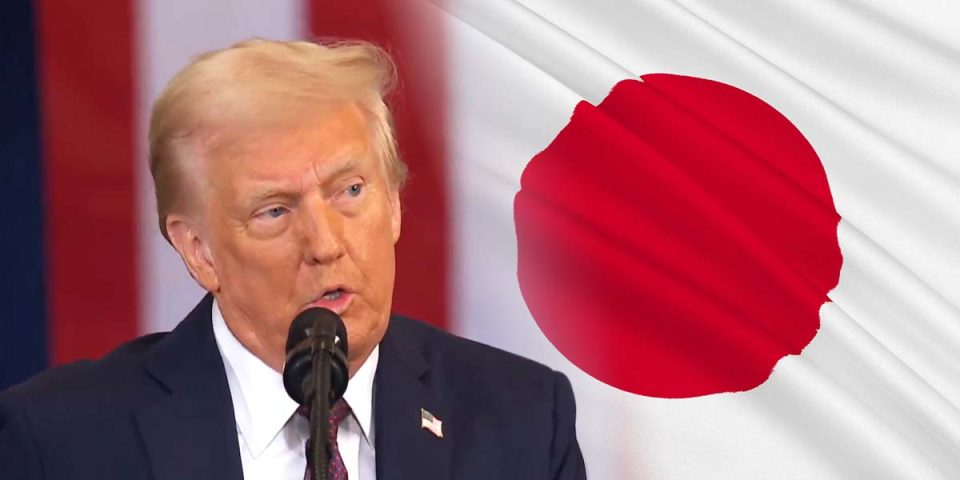
President Trump and Japanese Prime Minister Sanae Takaichi have signed a framework agreement aimed at securing the supply of critical minerals and rare earths through mining and processing cooperation. The deal, formalized during Trump’s Asia tour, underscores a growing U.S. strategy to reduce reliance on China, which dominates global rare earth production and has tightened export controls on these strategic materials. While the agreement does not include direct financial commitments, it establishes a policy foundation for joint investment, project identification, and supply chain resilience between the two allies.
The U.S.-Japan framework outlines several key initiatives, including coordinated support for capital and operational expenditures in mining and processing ventures, the creation of a bilateral Mining, Minerals and Metals Investment Ministerial within 180 days, and efforts to accelerate permitting processes in both countries. Both nations also committed to developing a U.S.-Japan Critical Minerals Supply Security Rapid Response Group, led by the U.S. Secretary of Energy and Japan’s Minister of Economy, Trade, and Industry, to identify supply vulnerabilities and expedite mineral delivery. Additionally, the agreement includes provisions for recycling technologies, geological mapping, and potential stockpiling arrangements to further strengthen supply chain security.
This latest agreement is part of a broader Indo-Pacific strategy that includes recent mineral frameworks with Australia, Malaysia, and Thailand, all aimed at building alternative supply chains outside of China. Japan’s role is particularly strategic, given its advanced technological capabilities in refining and manufacturing rare earth-based components such as permanent magnets and batteries. Meanwhile, the U.S. brings significant mining potential and political leverage, particularly through initiatives in the recent U.S. budget, which streamlines permitting and offers legislative support for domestic mineral development.
China’s tightening grip on rare earth exports has been a catalyst for these alliances. In April 2025, Beijing imposed restrictions on the export of several critical minerals, later expanding them to include goods containing trace amounts of rare earth elements. These measures have heightened concerns in Washington and Tokyo about the vulnerability of industries reliant on these materials, from defense systems to electric vehicles and data centers. The U.S. response has included not only diplomatic agreements but also direct investments, such as a $400 million Defense Department commitment to secure a 15% stake in MP Materials, which operates the only active rare earth mine in the U.S..
Despite these efforts, experts caution that building a fully independent supply chain will take years. The U.S. lacks sufficient domestic reserves of several critical minerals, including lithium, nickel, and graphite, and would still require substantial imports even under optimistic production scenarios. Moreover, scaling up refining capacity remains a major bottleneck, as China controls nearly 90% of global rare earth separation. The new U.S.-Japan pact does not resolve these structural challenges but represents a coordinated step toward long-term resilience.
The agreement also reflects a deeper geopolitical alignment between Washington and Tokyo, particularly as Trump prepares to meet Chinese President Xi Jinping in South Korea. By solidifying alliances in the Indo-Pacific, the U.S. aims to counterbalance China’s economic leverage while ensuring that key industries are not held hostage by supply disruptions. For Japan, the deal reinforces its position as a technological leader in the rare earth value chain and strengthens its national security posture amid regional tensions.
