
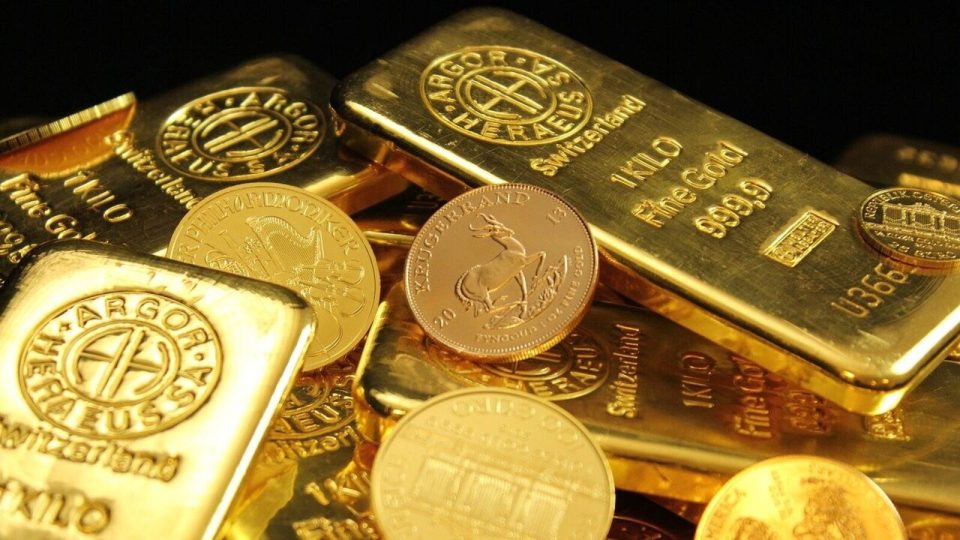
Gold has long been seen as a safe haven in times of economic uncertainty, and its price movements often reflect complex global dynamics. Over the past two days, gold prices experienced a noticeable decline, falling from a recent high of $4,250 to an intraday low near $4,032 before recovering slightly. That’s a drop of more than 5%. This article explores the key reasons behind this sharp price movement and what it means for investors, miners, and the broader market.
The gold price adjustment is primarily a result of technical market dynamics rather than a sudden fundamental shift in the precious metal’s long-term outlook. According to UBS Global Wealth Management, this recent decline is best described as a technical correction following a robust rally that saw gold prices surge by approximately 47% year to date. This pullback is part of natural market behavior where investors take profits after a significant run-up in prices. The sharp retreat below $4,000 reflected this profit-taking along with sell-offs triggered by shifts in futures market positioning.
Supporting this technical perspective is the stronger U.S. Dollar Index, which reached mid-2024 highs in early November. Gold often moves inversely to the dollar because a stronger dollar makes gold more expensive in other currencies, tempering demand. The renewed strength of the U.S. dollar therefore weighed on gold price momentum, accelerating the price decline over these two days.
Federal Reserve policy signals also played a pivotal role. Officials have recently indicated a “higher for longer” stance on interest rates, dampening expectations for near-term rate cuts. Higher interest rates raise the opportunity cost of holding non-yielding assets like gold, reducing some investors’ appetite for the metal. This hawkish tone from Fed officials contributed to the broader market sell-off, including in the gold market, pushing prices down further. These comments were significant enough to quash hopes for Fed easing and prompted a reassessment of gold’s near-term trajectory.
Despite this short-term decline, underlying demand drivers for gold remain robust. There was record inflow of about $24 billion into gold ETFs in the third quarter, reflecting strong investor demand as a hedge against inflation and geopolitical risks. While some investors withdrew funds in recent days, likely responding to price volatility and margin calls amid equity market declines, the broader structural factors such as inflation concerns and monetary policy uncertainty continue to support gold investment interest.
Globally, the economic outlook adds layers to the gold price story. The U.S. economy remains resilient, with recent estimates projecting GDP growth near 4% in the third quarter, even as fiscal challenges such as the government shutdown linger. In China, growth has slightly slowed but remains above target, with additional stimulus measures expected. This uneven global growth narrative contributes to gold’s volatility, as investors weigh the metal’s appeal as a stable store of value against growth-oriented assets.
From a market perspective, there is also a strong feedback loop involving related asset classes. For example, bitcoin, often dubbed digital gold, has experienced a confirmed breakdown recently, which contrasts with gold’s behavior but highlights the broader uncertainty in alternative stores of value and risk assets.
For companies in the industry, the price fluctuation serves as a reminder of the balance between opportunity and risk in precious metals markets. Mining companies benefit from higher gold prices but face challenges in periods of rapid price shifts as operational planning and investments hinge on stable projections.
Looking ahead, analysts suggest that while gold’s rally may be taking a breather, this correction does not signal the start of a sustained downturn. Instead, it appears to be a healthy recalibration after a steep surge.
The recent drop in gold prices is a confluence of profit-taking, a stronger U.S. dollar, and hawkish Federal Reserve comments, set against a backdrop of ongoing economic resilience and uncertainty. While the short-term price move may unsettle some investors, the fundamental reasons for holding gold remain intact, keeping it an important part of diversified portfolios and a key asset to watch as global economic and policy developments unfold.
