
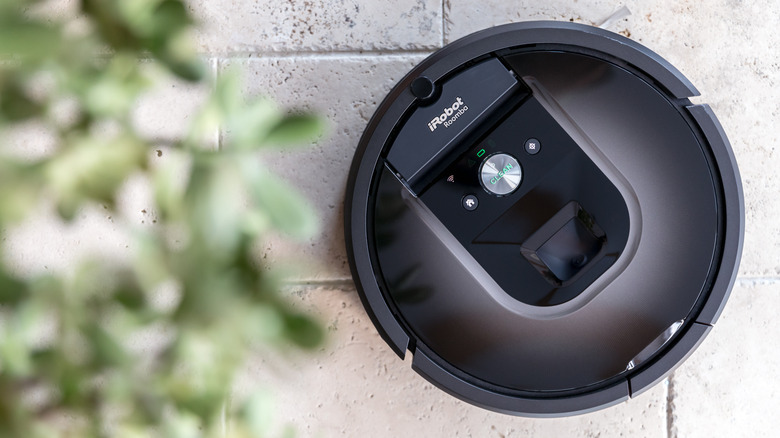
For years, iRobot’s Roomba was the rare gadget that could make its way across living rooms around the world and become a genuine cultural fixture. The idea that a small disc could quietly clean while you worked or slept captured the imagination of consumers and set off a wave of enthusiasm for home automation. But as technology matured and competition intensified, that early lead faded. Now, iRobot Corp. (NASDAQ: IRBT) has filed for bankruptcy protection in the U.S. and agreed to be acquired by Picea Robotics, a deal that will take the company private after a turbulent few years.
Founded in 1990 by a team of engineers from the Massachusetts Institute of Technology, iRobot was among the first to bring robotics into everyday homes in a practical way. The Roomba, launched in 2002, became its flagship, selling millions of units globally and inspiring a category of autonomous devices. For many years, iRobot thrived on consumer loyalty and clever engineering, but competition from lower-cost rivals gradually eroded its price advantage. The company’s expansion into other connected home products, such as robotic mops and pool cleaners, did not offset declining margins or rising production costs.
The last two years were especially difficult. As inflation weighed on consumer spending, demand for small home appliances softened. According to a company filing, iRobot’s revenue dropped sharply from 2022 to 2024, while its operating losses deepened. Supply chain pressures and a series of layoffs signaled that liquidity had become a concern long before the bankruptcy announcement. Amazon.com, Inc. (NASDAQ: AMZN) had once planned to buy iRobot in a $1.4 billion deal, but the agreement fell apart in early 2024 after antitrust regulators in the U.S. and Europe pushed back over data privacy concerns and potential market dominance.
When the Amazon deal collapsed, iRobot found itself in a difficult position: too indebted to sustain operations independently and too mature to attract high-growth investment capital. Picea Robotics, a China-based robotics manufacturer specializing in industrial and service applications, emerged as a buyer willing to inject fresh capital and assume iRobot’s obligations. While details of the transaction remain under wraps, the plan reportedly allows iRobot to keep its core product lines and continue operations under private ownership.
The bankruptcy filing is being treated primarily as a restructuring mechanism rather than a liquidation. That’s an important distinction because it suggests that Picea sees value in iRobot’s brand, technology, and access to Western markets. For many analysts, it also highlights a pattern playing out in the consumer robotics field. Early innovators often lose ground once competitors master similar designs at lower cost, and the economic cycles hit industries at different speeds. Automating a household, it turns out, is not as scalable as automating a factory.
Picea’s involvement hints at a larger strategic play. The company has been quietly expanding its presence in consumer-facing robotics, complementing its industrial base with home and service models intended for global distribution. By acquiring iRobot, Picea gains not only brand recognition but also established relationships with major U.S. and European retailers. Analysts say this could give Picea a path into Western markets at a time when cross-border acquisitions in technology are increasingly scrutinized.
The bankruptcy does not erase iRobot’s legacy. In many ways, the company’s story mirrors that of other first-generation tech pioneers that built entirely new categories, only to find themselves outpaced when those categories matured. It also reflects the broader challenges in consumer technology, where product differentiation narrows as hardware becomes commoditized and innovation leans toward software and ecosystems rather than devices themselves.
For consumers, the Roomba remains a familiar presence in homes, a reminder that technology can simplify tasks that once felt mundane. For the business world, however, iRobot’s bankruptcy serves as a case study in how early success in a nascent field does not always translate into long-term stability. As Picea Robotics takes the lead, the next chapter for iRobot might be less about headlines and more about endurance, seeing whether a once-revolutionary idea can find a sustainable place in a more crowded, more cautious market.
