
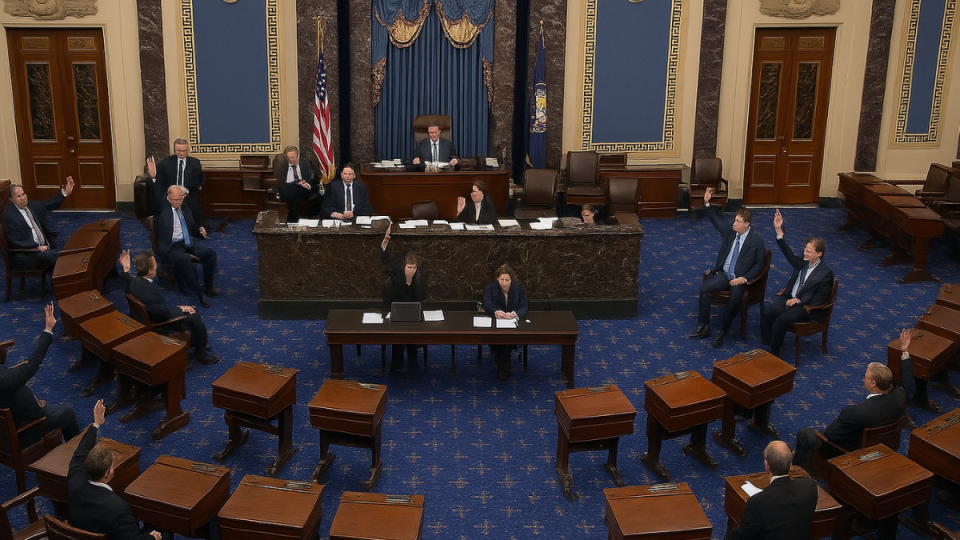
The U.S. Senate’s recent vote to undo a series of tariffs imposed during President Donald Trump’s administration marks a significant moment in ongoing debates over American trade policy. Yesterday, a bipartisan majority in the Senate approved a resolution aimed at ending the national emergency declaration that has underpinned sweeping “reciprocal” tariffs imposed globally since April. The vote passed 51 to 47, with four Republican senators aligning with Democrats to oppose these tariffs, signaling a notable fracture within the party and raising questions about the future direction of U.S. trade relations.
The tariffs in question include duties ranging from 10% to 50% on products from many U.S. trading partners including Canada, Brazil, China, the European Union, Japan, and South Korea. The tariffs were originally justified by the Trump administration as necessary countermeasures to unfair trade practices and national security concerns. The measures were framed legally as part of a national emergency declaration under the International Emergency Economic Powers Act, which allowed the administration to impose wide-reaching tariffs without congressional approval.
Historically, the use of emergency powers to impose these tariffs raised eyebrows and legal challenges. This week’s Senate vote was not the first attempt to challenge the tariffs in Congress. Earlier this year, similar resolutions aimed at ending tariffs on Canada and Brazil had at times garnered bipartisan support in the Senate but failed to progress due to strategic roadblocks in the House of Representatives. The House Republican leadership, spearheaded by Speaker Mike Johnson, has adopted rules designed to block such tariff repeal efforts. Furthermore, any such resolution faces the near-certain threat of a presidential veto.
Among the Republicans voting to undo the tariffs were Senators Rand Paul and Mitch McConnell of Kentucky, Susan Collins of Maine, and Lisa Murkowski of Alaska. These senators voiced concerns about the economic impact the tariffs have had on U.S. consumers and industries. Their support alongside Democrats revealed a growing unease with the economic consequences of these trade measures, including rising costs in manufacturing and agricultural sectors, and strained relations with key allied economies.
The implications of this vote extend beyond a symbolic gesture. It reflects the broader tension within the Republican Party and U.S. policymakers over how to balance protectionist impulses with the principles of free trade that have traditionally underpinned America’s economic stance. It also comes amid ongoing Supreme Court scrutiny of Trump’s legal authority to impose tariffs under emergency powers, a case that could have lasting effects on presidential authority in trade policy.
From a trade policy perspective, the tariffs sparked by the 2018-2020 Trump administration initiatives had led to retaliation by affected countries, eliciting trade disputes and reciprocal duties, especially from Canada and China, among others. The tariffs on Canadian goods, for instance, not only fueled political tension but also prompted marketing countercampaigns in Canada and threatened integrated supply chains that benefit border communities and industries on both sides. Similar dynamics played out with Brazil and China where tariffs were met with countermeasures that affected American exporters.
The Senate’s resolution calls for the termination of the national emergency declaration supporting these tariffs, effectively reversing the justification for the duties. Yet, despite the significance of the Senate vote, the resolution’s actual impact may be limited unless it gains traction in the House and withstands a presidential veto. The House’s resistance to consider any motions that challenge the tariffs signals that for now, these trade tensions and tariffs remain firmly entrenched in U.S. policy.
Nevertheless, the vote highlights cracks in what was once a solid front supporting Trump’s trade tariffs among his party members. As inflationary pressures and supply chain concerns persist, these dissenting voices stress the need for a recalibration of U.S. trade policy, one that weighs the costs of tariffs on American consumers and businesses alongside strategic trade objectives. The result could shape future tariff and trade negotiations and how the U.S. engages with allies and adversaries in global commerce.
This episode in U.S. trade policy serves as a reminder of how tariffs intended as leverage tools in trade negotiations can become complex and costly levers requiring delicate political negotiation and legislative oversight. Whether any future government embraces a similar approach to tariffs remains uncertain, but this Senate vote underscores the contentious and evolving nature of trade policy in Washington today.
