
[stock_market_widget type=”card” template=”basic2″ assets=”AMZN” realtime=”true” api=”yahoo-finance”]
The U.S. newspaper industry has been caught in a long, slow storm that shows no signs of clearing. Once the backbone of American public life, newspapers now face shrinking advertising revenues, fragmented audiences, and increasingly fierce competition from digital platforms. What was once a reliable business model, built on print subscriptions and classified ads, has become one of the hardest to sustain in a market driven by clicks and data.
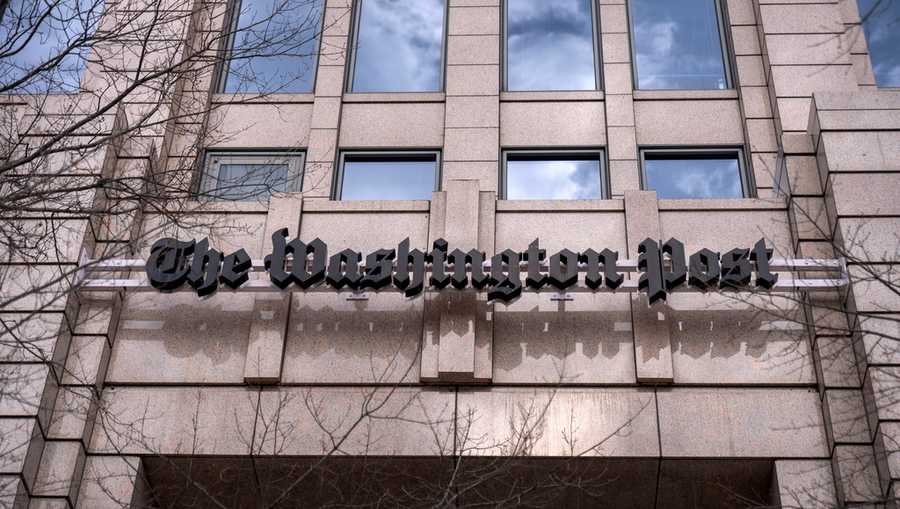
This tension came into sharp focus when The Washington Post announced widespread layoffs. According to Reuters, Executive Editor Matt Murray informed staff that the paper would be “closing the sports department in its current form” while also cutting back international coverage. The decision reportedly came after months of internal review and difficult discussions about how to reduce losses and reshape the newsroom structure.
Owned by Amazon.com (NASDAQ: AMZN) founder Jeff Bezos, The Washington Post has been both a symbol of innovation and a reflection of the broader struggles facing the industry. In 2023, the paper offered voluntary separation packages to employees across departments after reporting losses of $100 million. At the time, management hoped that a more agile structure would align the paper with a digital future. Instead, it exposed how even a paper with global prestige and a billionaire owner must still grapple with the same financial pressures confronting regional dailies across the country.
The economics driving these changes are stark. Pew Research Center data shows that U.S. newspaper advertising revenue fell from $49 billion in 2005 to under $10 billion by 2024. Print circulation, once measured in millions for major metropolitan titles, continues to erode each year as readers migrate online. Many local papers have simply disappeared, merging into smaller regional outlets or closing altogether. What remains are a few large institutions, like The New York Times, The Wall Street Journal, and The Washington Post, that have managed to build digital subscriber bases but still contend with high operating costs and unpredictable ad market.
Digital transformation offered both promise and peril. The internet lowered distribution costs and opened access to global audiences, yet it also demolished the traditional monopolies that newspapers once had over local advertising. Social media platforms now capture a disproportionate share of ad spending, while newsrooms must compete for attention in an endless stream of content. Subscription-based models have worked for some, but they depend heavily on scale, reputation, and trust. Smaller outlets often cannot sustain themselves on reader revenue alone.
For The Washington Post, digital adaptation has been both impressive and uneven. After Bezos purchased the paper in 2013, its digital audience grew rapidly. The company invested in technology, user experience, and data analytics, transforming the paper into a major online presence. However, as online ad margins tightened and audience growth plateaued, the challenge shifted from expansion to retention. Recent layoffs signal that the era of growth-through-scale may be yielding to a period of consolidation and cost control.
Across the U.S., similar patterns appear. News organizations are diversifying into podcasts, newsletters, and video channels, seeking new ways to engage readers and stabilize income. Nonprofit journalism outfits are also emerging to fill gaps in local coverage left by commercial publishers. Yet even these models face uncertain futures, as audiences increasingly rely on news delivered indirectly through aggregators or social networks.
What the current moment at The Washington Post underscores is not just the pain of transition but the maturity of an industry that has yet to find a stable digital identity. The heart of journalism, reporting, editing, storytelling, remains intact, but the business frameworks supporting it are being rebuilt in real time. Newspapers once defined the daily rhythm of American life; now they race to define their place in the digital rhythm of information itself.
As painful as this transformation may be, it is part of a renewal rather than an ending. Each contraction forces news organizations to reconsider what they do best and how they can earn trust and revenue from new generations of readers. Whether The Washington Post becomes leaner and more focused, or smaller and less ambitious, will depend on how successfully it reimagines not only its newsroom but the economics of journalism in a world that values attention more than paper.
