
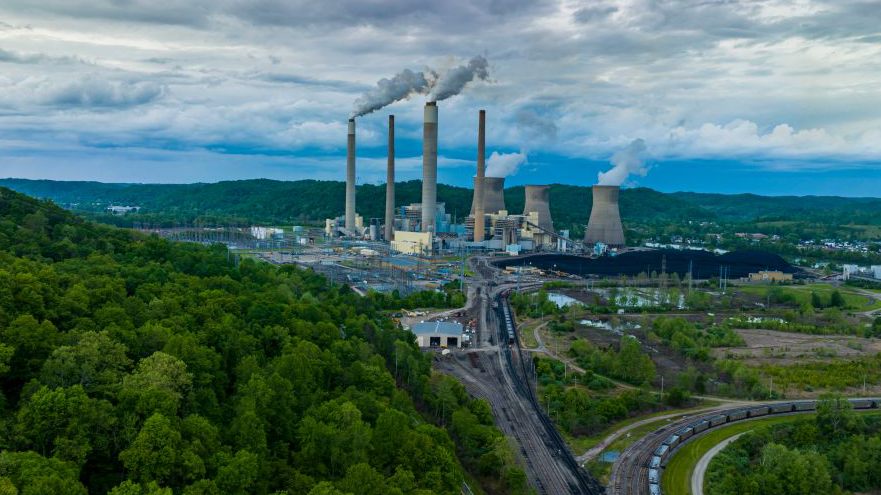
The Department of Defense has been directed to begin sourcing electricity for military installations from coal-fired power plants, marking a notable policy shift that links national defense operations with the domestic coal industry. Announced at the White House yesterday, the executive order introduces long-term purchase agreements designed to ensure steady demand for coal-generated power, an approach intended to keep several plants operating in energy-producing states such as West Virginia, Ohio, North Carolina, and Kentucky.
At the event, President Trump described coal as a critical part of safeguarding national and economic stability, emphasizing that the military must rely on energy sources that are, in his words, “secure, reliable, and American.” The order calls on the Pentagon to secure long-term power purchase agreements with domestic coal plants, ensuring a guaranteed buyer for a portion of the fuel’s electricity output. It also includes direction to the Department of Energy to issue federal funding to maintain coal operations in several states, including West Virginia, Ohio, North Carolina, and Kentucky.
The policy revives a long-running debate about how energy independence should be defined. Critics argue that the order reverses progress toward cleaner energy development, while supporters say it addresses vulnerabilities in the nation’s power grid. Coal plants, unlike some renewable sources, can produce electricity continuously, a factor the administration links to the uninterrupted power supply needed at defense sites and missile.
Coal’s share of U.S. electricity generation has fallen sharply over the past two decades, primarily due to the rapid expansion of natural gas and renewable energy. According to the Energy Information Administration, coal accounted for about 16% of total power generation in 2023 compared with more than 50% in 2001. Many older coal plants have closed or converted to natural gas, citing lower costs and stricter emissions regulations. Despite that decline, the administration argues that coal remains essential for “base-load” energy, the constant generation capability required to avoid interruptions during high demand or emergencies.
Analysts say the new directive may give coal producers temporary relief but will not fundamentally change the broader economics of the energy market. Natural gas remains cheaper on average per kilowatt-hour, and utility-scale solar installations have continued to expand, cutting costs faster than expected in recent years. They also note that the long-term environmental and regulatory challenges facing coal have not disappeared, especially as many U.S. states maintain their own decarbonization goals independently of federal policy.
For the Pentagon, compliance with the new order could create logistical and contractual complexities. Military bases draw power from a mix of public utilities and private suppliers, and existing agreements often prioritize cost efficiency and renewable integration. Transitioning some of that supply toward coal may require renegotiations with local utility partners and coordination with regional grid operators. The Department of Defense did not comment on how implementation will unfold but noted that energy security remains a strategic priority.
The executive order also reflects a broader symbolic gesture: positioning coal as a matter of defense policy rather than solely an economic issue. It continues the Trump administration’s effort to integrate domestic energy production with national security themes, echoing similar directives first announced in 2025. Whether this policy leads to lasting market effects will depend on how extensive the military’s new coal purchasing commitments become and how state-level regulators respond.
While the order received praise from some energy-state lawmakers, environmental organizations and clean-energy advocates contend that increasing reliance on coal contradicts global commitments to reduce carbon emissions. They argue that modernizing grid resilience through smarter infrastructure and diversified renewables could achieve energy security without the environmental trade-offs associated with coal combustion.
The coming months will reveal how this unusual fusion of defense procurement and energy policy develops in practice. What remains clear is that the administration has brought coal back into the center of the energy conversation by tying it directly to national defense planning at a time when much of the world is moving in the opposite direction.
