
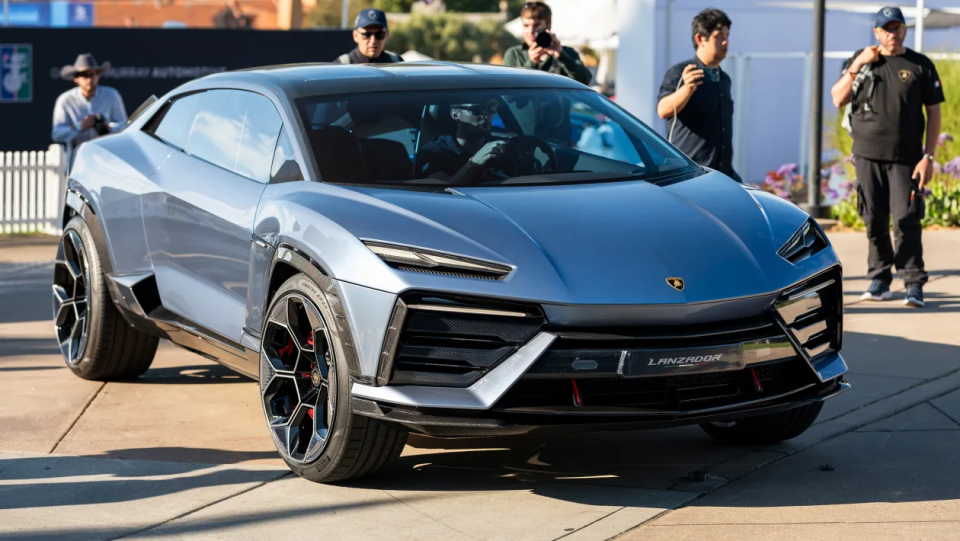
When Lamborghini unveiled plans in 2023 for its first fully electric car, the Lanzador, it was described as the company’s vision of a clean yet thrilling future. Now, after two years of development and market study, that vision has been parked. Lamborghini CEO Stephan Winkelmann has confirmed that the all-electric model will no longer proceed, citing low consumer demand and an uncertain appetite for high-performance electric supercars.
Lamborghini is part of the Volkswagen Group, through its Audi division, a structure that allows access to shared battery and engineering technology. Yet despite these resources, Winkelmann has described consumer interest in electric Lamborghinis as “close to zero.” His phrasing may sound blunt, but it reflects a cautious, data-driven view of a changing luxury car market. The company found that while interest in electric mobility continues to grow among mass-market drivers, enthusiasm within the small ultra-luxury segment remains limited.
What’s striking about Lamborghini’s decision is not rebellion against the EV trend, but recognition of a deeper emotional component in its brand identity. Owners often value the visceral sound, vibration, and drama of the engine as much as the speed itself. Winkelmann told The Sunday Times that the typical Lamborghini buyer seeks an “emotional experience,” something difficult to replicate in the silence of an electric drivetrain. The fear, he admitted, was that developing a high-performance EV today could become “an expensive hobby” that few customers would want to share.
Instead of pursuing a fully electric model, the automaker plans to focus on plug-in hybrids that balance performance with lower emissions. According to Winkelmann, plug-in hybrid electric vehicles, or PHEVs, represent a bridge between traditional combustion and full electrification. The company has already introduced hybrid versions of its supercars, beginning with the Revuelto, which combines a V12 engine with electric assistance. Each step, he emphasized, contributes to meeting regulatory goals while preserving the brand’s core emotional appeal.
Lamborghini is not alone in recalibrating its EV ambitions. Across the global auto industry, several major players have scaled back previously aggressive targets. Stellantis (NYSE: STLA) recently recorded a $26.5 billion charge related to its electric transition, saying earlier forecasts for demand were too optimistic. General Motors (NYSE: GM) reported a $7 billion impact tied to a slower production roll-out of EVs. Meanwhile, Ford Motor Company (NYSE: F) noted an $11.1 billion net loss in the fourth quarter, with CEO Jim Farley remarking that “the customer has spoken” about what they value most in vehicles.
Several factors are converging behind this cooling momentum. Inflationary pressure has kept EV prices high, and charging infrastructure still trails gasoline availability in many markets. Meanwhile, improving hybrid technology has extended the relevance of combustion engines, offering consumers some environmental goodwill without the anxiety of limited range. For Lamborghini, whose vehicles function more as emotional purchases than practical transportation, ignoring that feedback would be a bigger risk than slowing its EV progress.
This adjustment also highlights a subtle difference between the luxury and mainstream EV markets. Many premium automakers, from Ferrari to Bentley, face similar challenges in crafting electric vehicles that deliver the multisensory engagement expected by affluent enthusiasts. The economics further complicate the equation: the smaller production volumes of supercars make each model a major financial gamble, so any uncertainty in demand can jeopardize profitability.
Still, Lamborghini is not abandoning electrification entirely. Winkelmann called the company’s approach “pragmatic,” focusing on readiness for a time when battery technology and market sentiment better align. The company will continue to invest in electrification research, primarily through hybrid development programs shared with Audi and Porsche. Future regulations, especially in the European Union, could eventually force a shift beyond hybrids, but for now, Lamborghini believes its customers prefer emotion over experimentation.
The move offers an instructive lesson about the psychology of luxury consumers. At the ultra-high end, innovation alone does not sell cars; connection does. The growl of a V12 engine or the tactile feel of mechanical components remains central to Lamborghini’s identity. Until an electric car can reproduce that emotional spark, the automaker seems content to wait, and to keep its supercars roaring, not humming, down the road.
