
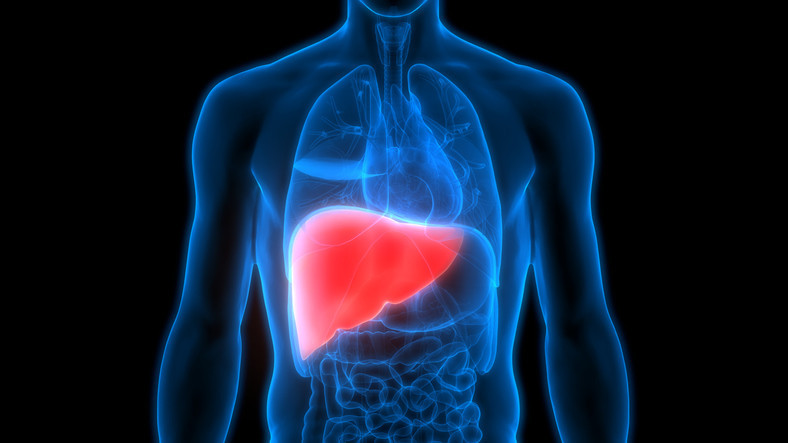
The liver is a patient organ. It can absorb years of damage from excess fat or heavy drinking before anyone notices, and by the time symptoms appear, scarring may already be well advanced. That quiet progression is why liver disease has turned into one of the more closely watched corners of drug development.
The largest piece of the market is MASH, short for metabolic dysfunction-associated steatohepatitis. It used to be called NASH, and it develops when fat builds up in the liver and triggers inflammation that slowly hardens into scar tissue. A study in JAMA Network Open estimated that 14.9 million U.S. adults had MASH in 2020, rising to 23.2 million by 2050, with yearly liver-related deaths projected to climb from about 30,500 to 95,300 over the same period.
For years there was nothing to prescribe. That changed in March 2024 when the FDA approved Rezdiffra, a once-daily pill from Madrigal Pharmaceuticals, Inc. (NASDAQ: MDGL). Uptake has been fast. Madrigal reported second-quarter Rezdiffra sales of $364.3 million and more than 49,000 patients on the drug as of June 30th.
The second approval came on August 15, 2025, when the FDA cleared Wegovy, the weight-loss injection from Novo Nordisk A/S (NYSE: NVO), for adults with MASH and moderate to advanced scarring. That decision pulled the GLP-1 drug class, already famous for weight loss, directly into liver care.
Alcohol drives a separate and growing share of liver illness. Alcohol-associated liver disease covers everything from fatty buildup to hepatitis and cirrhosis caused by heavy drinking. A JAMA Network Open analysis found the U.S. death rate from the disease nearly doubled between 1999 and 2022, from 6.71 to 12.53 per 100,000 people, with a sharp acceleration around the pandemic.
Behind that sits alcohol use disorder, the medical term for drinking a person cannot control. Federal survey data show about 28.1 million U.S. adults had the condition in 2023, yet only 2.0% received medication for it. Three drugs are approved, but they are rarely prescribed.
Altimmune, Inc. (NASDAQ: ALT) is building its business around all three conditions with a single drug candidate called pemvidutide. It works by activating two hormone receptors in equal measure. The glucagon side acts directly on the liver to reduce fat, inflammation and scarring, while the GLP-1 side curbs appetite and drives weight loss.
The company released its third quarter results today. Its net loss widened to $31.6 million, or $0.15 per share, from $19.0 million, or $0.21 per share, a year earlier. The per share figure fell even as the loss grew because the share count more than doubled. Research and development spending rose to $27.0 million from $15.0 million, driven by two trials now underway.
The bigger of those is PERFORMA, a global Phase 3 study in MASH that began in July. Its 52-week topline results are expected in 2029. The second is RESTORE, a Phase 2 trial in alcohol-associated liver disease that has finished enrolling patients, with topline data due in the second half of 2027.
The alcohol use disorder program has the most near-term activity. Pemvidutide hit its main goal in the RECLAIM Phase 2 trial in July, reducing heavy drinking days, and the data was featured as a late-breaking presentation at the AASLD Liver Meeting. The FDA has granted the drug Fast Track status for the condition, and the company meets with the agency in December to discuss a Phase 3 program.
The company ended September with $480 million in cash, cash equivalents and investments. That balance matters because the main MASH answer is still years away, and it arrives in a field where Madrigal and Novo Nordisk already have approved drugs on the market. Pemvidutide’s case rests on whether a drug built to act directly on the liver can stand apart from therapies that patients and doctors are already using.
