
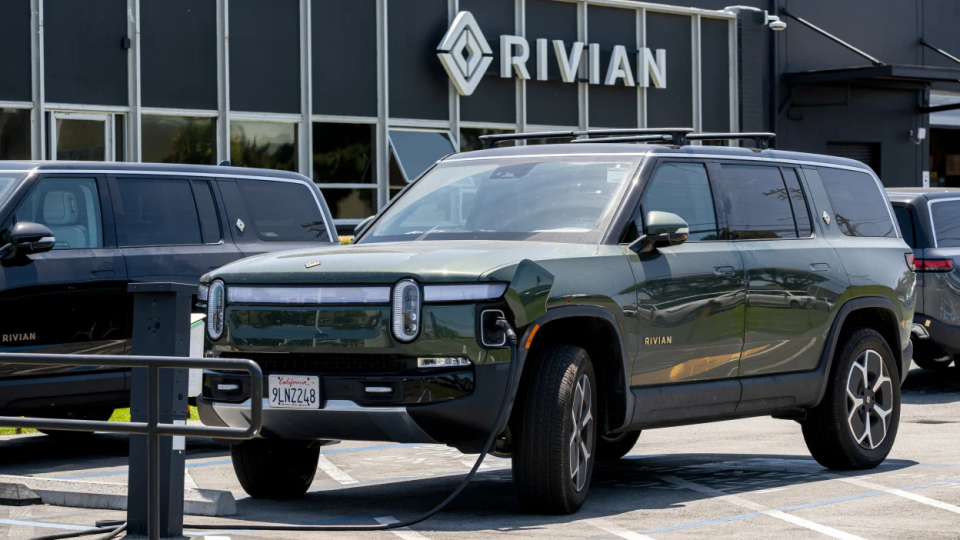
Rivian Automotive (NASDAQ: RIVN) chose a telling label for its showcase, “Autonomy and AI Day,” because it signals that the company wants to be judged less like a niche EV startup and more like a technology platform with a long runway. Shares have gained about 33% so far this year, which suggests that the market still believes in the story, but the stock is also down close to 80% from its 2021 initial public offering, a reminder of how costly early missteps and a tougher macro backdrop have been for shareholders. That gap between past hype and current valuation sets the stage for why Rivian needs a new narrative that moves beyond being simply another maker of electric pickups and SUVs.
The immediate goal of an event like this is straightforward. Rivian wants to show that it owns more of its technology stack than many rivals, especially in software, driver assistance, and data infrastructure. Management has been talking for some time about building in-house systems, from cloud services to “zonal” electronics architectures that simplify how computing power is distributed around the vehicle. By putting those efforts on display, the company is trying to convince investors that it can improve margins over time, differentiate its products in a crowded market, and avoid becoming dependent on third party suppliers for the features that drivers increasingly care about.
There is also a defensive angle. The broader EV market has shifted from a land grab for early adopters to a slower grind of persuading mainstream buyers, which has exposed weaker brands and stretched balance sheets across the industry. Sales growth for electric vehicles has decelerated, incentives have become more common, and some large automakers have delayed or scaled back future EV plans. For a young manufacturer that is still working toward sustained profitability, those trends translate into more scrutiny and less forgiveness when execution slips. An autonomy and AI focused event gives Rivian a chance to argue that its long-term value will come not only from how many vehicles it ships, but also from the capabilities built into each one.
Comments from CEO RJ Scaringe in recent interviews provide useful context for this shift in emphasis. He has repeatedly described autonomy as a key dividing line between winners and laggards in the auto industry over the coming decade and has indicated that the company spends more research and development money on this area than on any other part of the business. That kind of allocation is a strong signal for investors. It says that Rivian is willing to absorb near term costs and complexity in exchange for the possibility that, if and when automated driving features become mainstream, the company will have already built the necessary hardware, software, and data capabilities internally.
For customers, the pitch is more experiential but rests on the same foundation. Rivian has always tried to sell an image of adventure ready vehicles that double as everyday workhorses, and more capable driver assistance features fit neatly with that identity. Scaringe has talked about wanting technology that makes vehicles more useful on more types of roads, not only on carefully mapped highways. If Rivian can expand its hands free and semi automated systems to “just about any road” in daily use, as he has suggested, that would support higher price points and create a reason for buyers to pick a Rivian over a competing truck with similar range and towing numbers.
From a business model perspective, the interesting question is how far Rivian intends to go in turning autonomy and AI into recurring revenue rather than just a one time feature sale. Investors have watched Tesla build a story around software upgrades and full self driving packages that can be sold long after the initial delivery of a vehicle. Rivian appears to be angling toward a similar logic, where an expanding suite of software enabled features, potentially delivered over the air and tied to subscription or usage models, could smooth cyclicality in hardware demand. That is part of why showing robust in house engineering matters, because it strengthens the argument that Rivian is building an asset that can be monetized repeatedly instead of only once at the point of sale.
All of this, of course, does not erase the reality that Rivian still faces the mundane but crucial tasks of reducing costs, scaling production efficiently, and weathering the uneven pace of EV adoption in the U.S. and other markets. The stock has climbed this year, yet the deep drawdown from the IPO level is a reminder that the market has already punished overpromising and underdelivering. An autonomy and AI showcase will not fix those problems on its own. What it can do is refine the way investors and customers think about the company, from a capital intensive hardware story to a longer arc in which software, data, and automation sit closer to the center of Rivian’s future value.
