
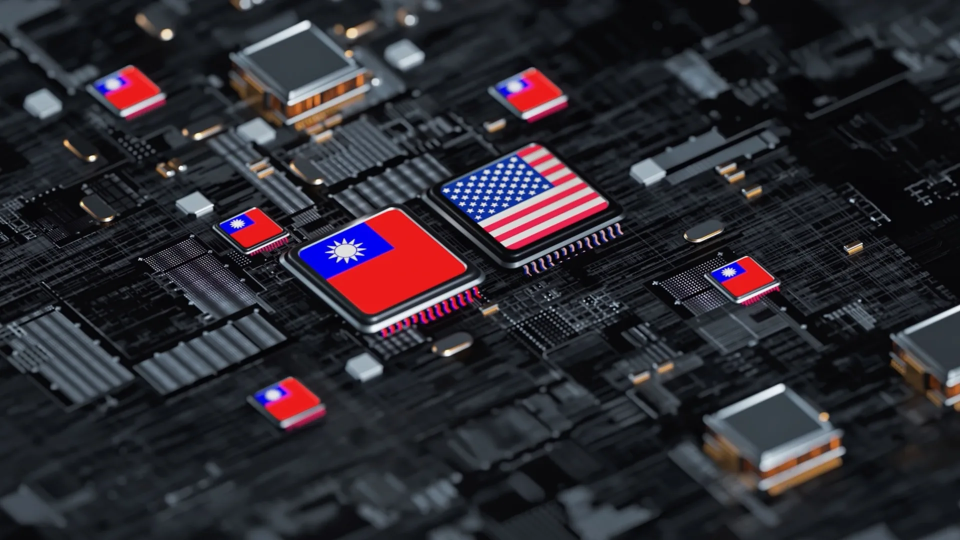
When Taiwan’s top trade negotiator described the U.S. request to shift 40% of the island’s semiconductor production to American soil as “impossible,” the comment reverberated beyond Taipei. It was a rare public rejection of a U.S. policy proposal that underscores the limits of how far political will can bend industrial reality.
The statement came during an interview with Vice Premier Cheng Li-chiun on a Sunday broadcast of Taiwan’s Public Television Service. She said she had made Washington aware that such a move would not be feasible. The U.S. plan, first promoted by Commerce Secretary Howard Lutnick earlier this year, was intended to reclaim a large share of chip manufacturing considered vital to economic and national security interests. Cheng emphasized that Taiwan’s semiconductor ecosystem, built over several decades, cannot simply be lifted and rebuilt elsewhere without losing the efficiency and expertise that make it the world’s most advanced.
To understand the skepticism, it helps to look at the structure of Taiwan’s semiconductor industry. The island’s ecosystem is not just one company but a network of specialized suppliers, engineers, and logistics systems concentrated primarily in the Hsinchu Science Park region. Taiwan Semiconductor Manufacturing Company (TSMC) (NYSE: TSM, TWSE: 2330) sits at the center of that network, producing more than 60% of the world’s contract chips and over 90% of the most advanced logic semiconductors used in smartphones and data centers.
While TSMC already operates a major fabrication facility in Arizona, its output represents only a tiny fraction of the company’s total capacity. The cost of building and staffing chip plants in the U.S. is also markedly higher. A report from the Semiconductor Industry Association indicates that building fabrication capacity in the U.S. can be up to 50% more expensive than in Taiwan or South Korea, largely due to labor costs and differing regulatory systems.
Taiwanese officials argue that this difference is not simply financial. The island has deep institutional know-how and an interconnected ecosystem that allows design firms, material suppliers, and test equipment makers to collaborate in real time. Recreating that complex structure overseas would take decades. Even TSMC’s Arizona project has faced delays and cost overruns, highlighting the friction involved in replicating the efficiency of its home base.
For Washington, the drive to bring semiconductor production home is part of a broader ambition to reduce dependence on foreign-controlled supply chains. The 2022 CHIPS and Science Act included over 50 billion U.S. dollars in incentives to attract semiconductor investment and boost domestic capacity. But as critics note, financial incentives cannot replace decades of accumulated technical know-how and concentration of supplier infrastructure. Policymakers must also consider that U.S.-based plants would primarily serve regional demand rather than replace global supply lines.
Taiwan’s officials have also raised concerns about the geopolitical message such a relocation would send. Semiconductor production is one of Taiwan’s most valuable economic assets, providing leverage in its international relations and economic partnerships. Moving a significant portion of it abroad could diminish the island’s economic resilience and diplomatic bargaining power. The response by Cheng Li-chiun was therefore both practical and political, signaling that Taiwan views its semiconductor sector not merely as an industry but as a component of national identity and security.
From the American perspective, the push reflects anxiety about supply vulnerability exposed during the COVID-19 pandemic and deepened by strategic competition with China. U.S. automakers, defense contractors, and tech companies all depend on a stable chip supply. But the idea of transferring nearly half of Taiwan’s production capacity to the U.S., as recently floated by Secretary Lutnick, faces resistance not only from Taiwanese policymakers but also from industry executives who warn that such an attempt could fracture the global supply system and actually increase costs for chip buyers.
Behind this diplomatic back-and-forth lies a central reality: semiconductor production is no longer just a matter of technology or trade, but of geography itself. The concentration of talent, energy supply, logistics, and research institutions form the invisible architecture of this industry. Taiwan’s declaration that moving 40% of its chip manufacturing abroad is “impossible” is both an acknowledgment of physical constraints and a diplomatic reminder that industrial networks are living systems, not machines that can be relocated at will.
For now, the discussion between Washington and Taipei continues, but each side appears to be operating from a different premise. The U.S. seeks security through diversification and control, while Taiwan safeguards stability through specialization and interdependence. The gap between those goals may define the next decade of global technology politics as much as any innovation in silicon itself.
