
Electricity bills across the United States have climbed at more than twice the speed of inflation in the past year, and that jump is starting to reshape national politics. The latest figures from the U.S. Bureau of Labor Statistics show a 6.3% rise in average power costs in 2025 compared to a 2.4% overall inflation rate. For millions of households, that difference translates into a simple reality: keeping the lights on costs far more than it used to.
The concern over energy prices reached the White House this week, where President Trump convened leaders from the country’s largest technology companies to discuss their role in rising electricity demand. These firms, including Google, Amazon (NASDAQ: AMZN), Microsoft (NASDAQ: MSFT), Meta (NASDAQ: META), and OpenAI, have become some of the biggest consumers of power in the world. Their data centers form the backbone of cloud computing and artificial intelligence, but they also strain the aging U.S. electrical grid.
At the meeting, the administration announced a voluntary pledge under which these companies would develop, buy, or offset their own energy supply for future AI operations. They also agreed to help fund upgrades to local power infrastructure. White House officials framed the move as a way to reduce long-term pressure on electricity prices, a problem that increasingly affects suburban and swing voters ahead of the midterm elections.
The timing is politically delicate. Conflict in the Middle East recently sent gasoline prices soaring overnight, reversing a year of relative relief at the pump, according to data from the American Automobile Association. Although the administration promised short-term measures such as offering risk insurance for oil tankers passing through the Strait of Hormuz, many economists argue that the deeper issue lies within domestic energy supply and demand.
Soaring electricity use from AI data farms could become the next major battle over energy policy. A recent Pew Research Center study estimated that the number of data centers in operation has doubled from 2018 to 2025, with new facilities concentrated not only in traditional tech hubs such as California and Virginia but also in politically sensitive swing states like Georgia and Arizona.
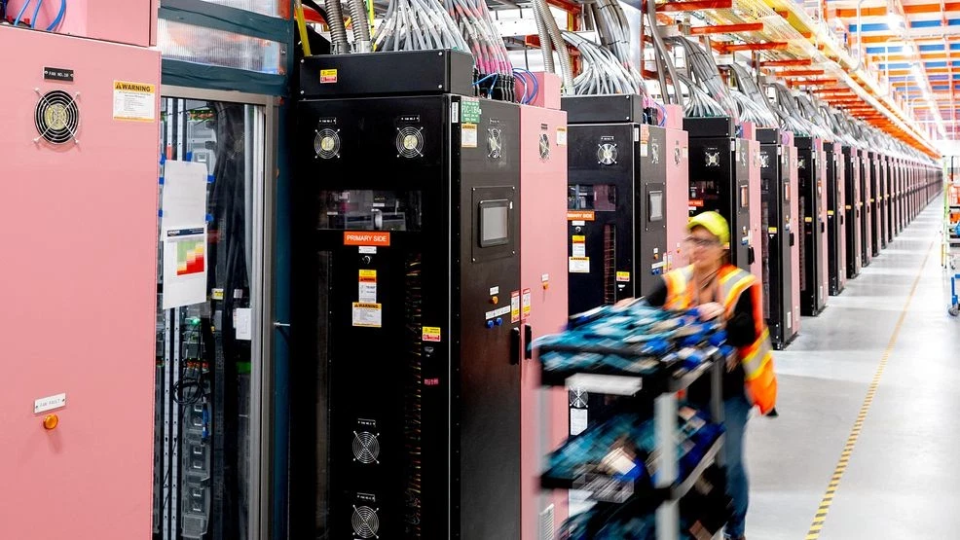
Industry experts say the trend reflects both technological progress and an infrastructure challenge. Each new AI data complex requires massive power input, often equivalent to that of a small city. That, in turn, drives utilities to raise rates or request new transmission investments that customers eventually pay for. Mark Wolfe, executive director of the National Energy Assistance Directors Association, described the dynamic as one in which middle-income households “feel the squeeze in their monthly budgets because energy bills now compete directly with other essentials.”
Companies have been moving to get ahead of this problem. Amazon has committed more than $500 million to develop small modular nuclear reactors for data center power generation. Microsoft has outlined a similar plan, working with utilities in Wisconsin and other states to test nuclear and renewable energy integration. Yet even these projects could take years to deliver measurable results.
The White House initiative does not carry legal enforcement. Participation is voluntary, and that raises questions about follow-through. Some lawmakers have proposed measures requiring transparency over how much energy major data companies consume and how their rates compare with those of residential users. In December, three Democratic senators opened an investigation into whether large technology corporations were contributing to high consumer power bills. The inquiry targets seven firms, including Microsoft, Google, Amazon, and Meta, and seeks detailed disclosures of energy use policies.
The intersection of technology and energy is not new, but the scale is. Between 2015 and 2021, electricity prices generally moved in parallel with inflation, offering households a degree of predictability. That link has broken down as demand from AI and cloud services has risen. Economists point out that without major investment in generation and efficiency, higher power costs could persist even if fuel prices stabilize.
For now, both the administration and the tech industry face a shared test. Voters are anxious about affordability, while investors watch how energy costs could influence corporate margins. The success of the new pledge may hinge less on political promises than on whether technology companies can deliver reliable, cost-effective power on their own. If they do, the outcome could redefine how the U.S. powers its digital future. If they cannot, Americans might find that the price of innovation comes with an electric bill few were ready to pay.
