
[stock_market_widget type=”card” template=”basic2″ assets=”WGO.V” realtime=”true” api=”yahoo-finance”]
More than a century after the Klondike Gold Rush, the Yukon’s gold story still starts in its creeks. Prospectors in 1898 went after loose flakes and nuggets in stream gravels, known as placer gold, and placer mining in the Klondike has produced roughly 20 million ounces since then. The harder question has always been where that gold came from. For decades, the best-known local hard rock source, the Lone Star mine, produced only about 1,240 ounces between 1912 and 1914.
That changed in 2008, when a gold deposit was found about 95 km south of Dawson City, in what is now called the White Gold District. The discovery set off a second Yukon gold rush. Exploration spending rose more than thirtyfold, and over a hundred junior companies staked about 200,000 claims. Much of the area escaped glaciation, leaving bedrock buried under deep weathered soil that only trenching and drilling can get past.
Finding gold is only the start. Before a mine gets built, a company has to show that recovering the gold could make money. In Canada, the first formal attempt is usually a Preliminary Economic Assessment, or PEA. The national mining disclosure rule, NI 43-101, defines it as a study, short of a pre-feasibility or feasibility study, that includes an economic analysis of whether mineral resources could be viable. It sketches a mine plan with cost estimates that typically carry an accuracy range of plus or minus 30% to 40%.
A PEA may also use inferred resources, the least certain category of estimated gold in the ground. A feasibility study may not. That is why a PEA is best read as an early picture of what a project could become, rather than a firm forecast.
That background frames today’s filing by White Gold Corp. (OTCQX: WHGOF) (TSXV: WGO). The company has filed the full technical report behind the PEA for its White Gold Project, which covers four deposits: Golden Saddle, Arc, Ryan’s Surprise and VG. The project lies within the Traditional Territory of the Tr’ondëk Hwëch’in, and the report was prepared by JDS Energy & Mining.
Headline results first appeared on August 10th. They showed an after-tax net present value (NPV) of about $1.34 billion (C$1.9 billion), a 38% internal rate of return (IRR) and a 1.7 year payback. NPV estimates what a project’s future cash is worth today, while IRR works like an annual rate of return. The company announced optimizations on August 28th. The filed report now shows an after-tax NPV, discounted at 5%, of $1.31 billion (C$1.856 billion), a 41% IRR and a 1.5 year payback, using a gold price of $3,600 per ounce.
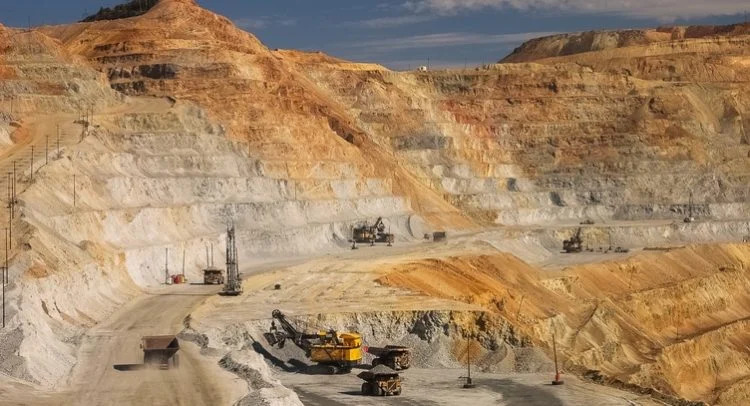
The plan calls for an open pit mine feeding a mill that processes 12,000 tonnes a day over a 9.4 year life. Output would average 188,000 ounces a year, and 223,000 ounces in the first five years. Initial capital is estimated at $708 million (C$1.002 billion), with all-in sustaining costs of $1,482 per ounce.
The $3,600 base case sits well below the current spot price of about $4,300 per ounce. At $4,500 gold, the after-tax NPV rises to $2.06 billion (C$2.911 billion) with a 57% IRR. Even the base case is several times the company’s market value of roughly $323 million. The mine plan uses only about 60% of current resource ounces, and it includes inferred ounces.
Agnico Eagle Mines Limited (NYSE: AEM, TSX: AEM), one of Canada’s largest gold producers, is a major shareholder. In its most recent financing announcement, White Gold said Agnico intended to maintain an interest of approximately 19.8% on a partially diluted basis.
The next chapter depends on the drill. Between 15,000 and 20,000 metres are being drilled on the project in 2026, and nothing drilled after November 1, 2025 is in the current resource. The company plans more metallurgical testing, an updated resource estimate and a next stage of economic study. Each of these will test whether today’s numbers hold up.
