
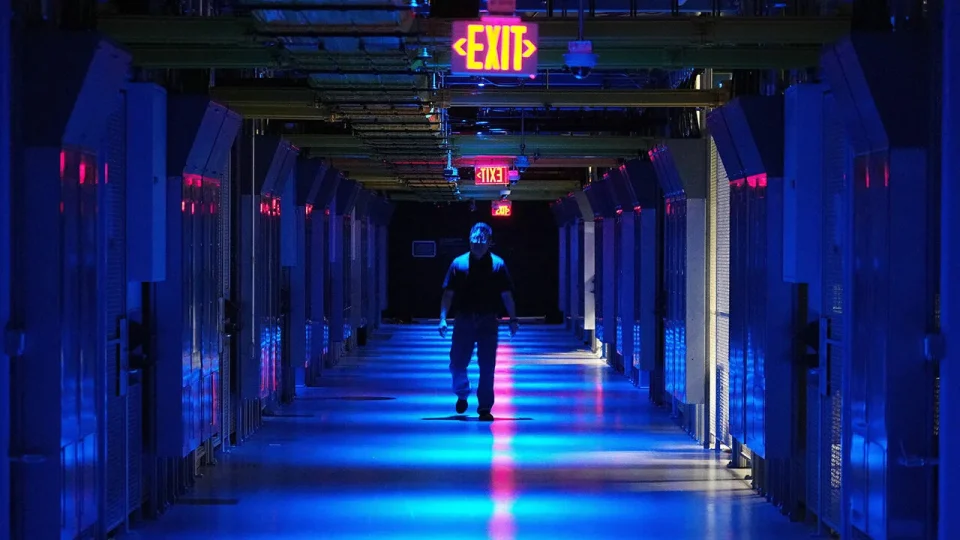
Electricity has become the unseen fuel of the digital era, powering not just homes and industries but also the vast network of data centers that keep the modern economy running. Every time a query is sent to an artificial intelligence platform or a streaming video is watched, vast racks of servers hum into action. These operations consume an extraordinary amount of power. As the rise of generative AI escalates, data centers have become some of the fastest-growing consumers of electricity in the United States.
Studies from BloombergNEF suggest that by 2030, U.S. data centers could require nearly 8% of the nation’s total electricity supply, up from about 3% in 2023. The largest facilities, many of them supporting AI workloads, now rival small cities in power usage. The sheer demand has caught not only the attention of utility providers but also lawmakers, who are beginning to see potential implications for grids, ratepayers, and climate goals.
To understand the scale, it helps to look at how AI training works. Systems like the ones used by Alphabet Inc. (NASDAQ: GOOGL), Microsoft Corporation (NASDAQ: MSFT), and Amazon.com, Inc. (NASDAQ: AMZN) rely on massive clusters of specialized chips known as GPUs, which must run continuously for days or weeks to fine-tune large language models. Each chip draws significant power, and when replicated across entire data halls, the energy demand becomes remarkable. Cooling systems, which often account for roughly 30% of a data center’s total consumption, add even more strain.
As utilities work to balance generation with surging digital consumption, new power projects and transmission expansions are being reconsidered or expedited. According to the U.S. Energy Information Administration, the number of large-scale data centers has more than doubled since 2015, with many concentrated in regions like Northern Virginia, central Texas, and Ohio. In some areas, utilities have asked regulators for permission to raise rates or delay renewable generation targets, citing demand from AI complexes.
That mounting pressure is now prompting political inquiry. Democratic senators on the Energy and Natural Resources Committee have sent formal information requests to several major technology firms, seeking details about their current and projected electricity use. Lawmakers are asking how these companies plan to mitigate strain on power grids, how much renewable energy they actually use, and whether they will disclose their consumption publicly. The letters also press the Federal Energy Regulatory Commission and Department of Energy for an assessment of how AI data centers could reshape national energy planning.
The questions are not just about numbers but about transparency. While companies often tout carbon-neutral goals, few publish full data on total megawatt consumption. Some utilities have reported privately that a single AI-focused campus can demand more power than a mid-sized manufacturing plant. The public, meanwhile, is beginning to wonder whether innovation’s price tag now includes higher energy bills.
These concerns come during a broader shift in U.S. energy policy. The Inflation Reduction Act and subsequent infrastructure programs have injected billions into grid modernization and clean generation, yet the pace of consumption from digital infrastructure could outstrip those gains. Industry analysts note that unless improvements in chip efficiency and cooling systems accelerate, future AI development could require a parallel expansion in energy production that complicates emission targets.
Still, the story is not purely one of strain. Many technology companies are negotiating long-term renewable power agreements and funding new generation directly. Microsoft and Google have both publicized commitments to match data center consumption with zero-carbon electricity in the coming decade. Researchers are also exploring liquid cooling technologies and modular designs that reduce waste heat and improve efficiency.
What this Senate probe underscores is a pivotal moment of accountability. Artificial intelligence may be the defining innovation of this century, but its infrastructure now occupies a physical and political space once reserved for heavy industry. The balance between digital progress and sustainable energy use is becoming one of the most important policy challenges of the next decade, not only for lawmakers and utilities but for every consumer who pays a power bill.
