
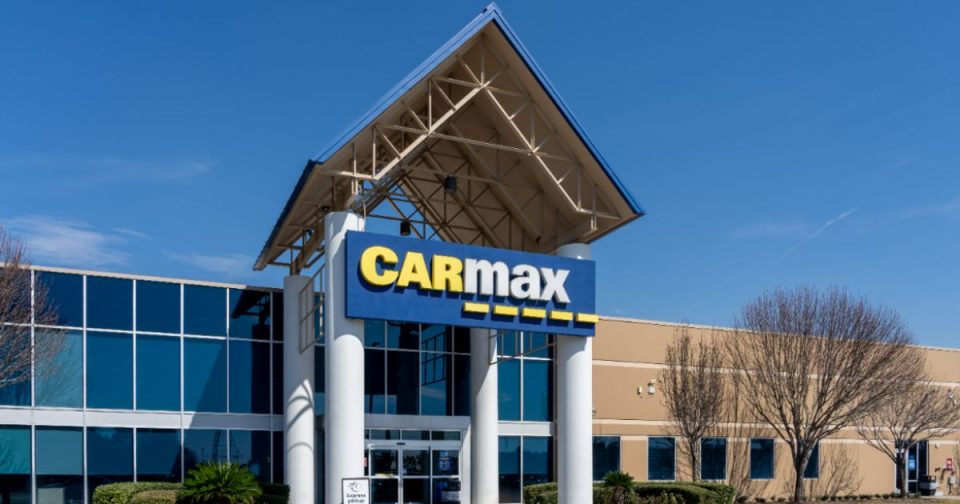
Shares of CarMax (NYSE: KMX) tumbled sharply today after the used car retailer reported second-quarter results that fell well short of Wall Street’s expectations. The company revealed earnings per share of $0.64 compared to analysts’ estimates of $1.04 and posted revenue of $6.594 billion versus projections of approximately $7.02 billion. This marks a 6.0% decline in revenue from $7.01 billion during the same period last year and reflects broader challenges impacting the used vehicle market.
The second quarter ended August 31, 2025, proved difficult for CarMax as total used vehicle unit sales fell 4.1% to 338,031 units. Retail sales, a critical segment for the company, declined 5.4% to 199,729 vehicles, with comparable store sales down by 6.3%. Revenue from retail used vehicles dropped by 7.2%, driven largely by lower unit sales and a decrease in average vehicle selling prices. Wholesale sales were also pressured, with unit declines of about 2% to 138,000 vehicles, although slightly higher average prices moderated the revenue impact.
CarMax’s finance arm, CarMax Auto Finance (CAF), experienced setbacks as well. Income fell 11.2% to $102.6 million, chiefly because of increased provisions for loan losses. The company reported a significant rise in estimated lifetime losses on current auto loans, reflecting softness in loans originated in 2022 and 2023. These higher loss provisions offset gains from net interest revenue and added to the profitability headwinds.
Despite the difficult numbers, CEO Bill Nash called the quarter “challenging” but expressed confidence in the company’s long-term approach. Nash pointed to strategic measures underway, including a campaign to enhance omnichannel customer experiences and an ongoing effort to reduce selling, general, and administrative expenses by at least $150 million over the next 18 months. Some of these savings are expected to begin materializing in fiscal 2026 with the remainder targeted for 2027.
Operationally, CarMax continued to invest in growth opportunities amidst the downturn. The company opened new retail locations in Tuscaloosa, Alabama; El Cajon, California; and Hagerstown, Maryland. It also launched a dedicated reconditioning and auction center near Richmond, Virginia, aimed at boosting efficiency and product flow. These investments signal a focus on long-term competitive advantage even as the broader used auto market faces pressure.
Margins and profitability metrics painted a mixed picture. Total gross profit declined by 5.6% to $717.7 million year-over-year, but unit margins held steady, with retail used vehicle units contributing a robust gross margin of around $1,216 per unit. Extended protection plans, which contribute to margin stability, also remained consistent on a per-unit basis compared to the prior year. Selling and administrative expenses were down slightly by 1%, aligning with management’s cost-cutting goals.
The stock responded sharply to the earnings miss, with CarMax shares hitting a five-year low on heavy volume. The drop of more than 25% in early trading reflects investor concern about near-term risks and the durability of used vehicle demand amid economic uncertainty. However, the company’s track record of profitability and its current initiatives offer points of resilience as it navigates the shifting market landscape.
Looking ahead, CarMax faces a crucial period in managing operational efficiency while sustaining customer engagement and unit sales. How the company balances margin preservation with growth investments will be key to restoring investor confidence. CEO Nash’s commitment to long-term strategy suggests a willingness to tolerate short-term volatility for potential future gains.
