
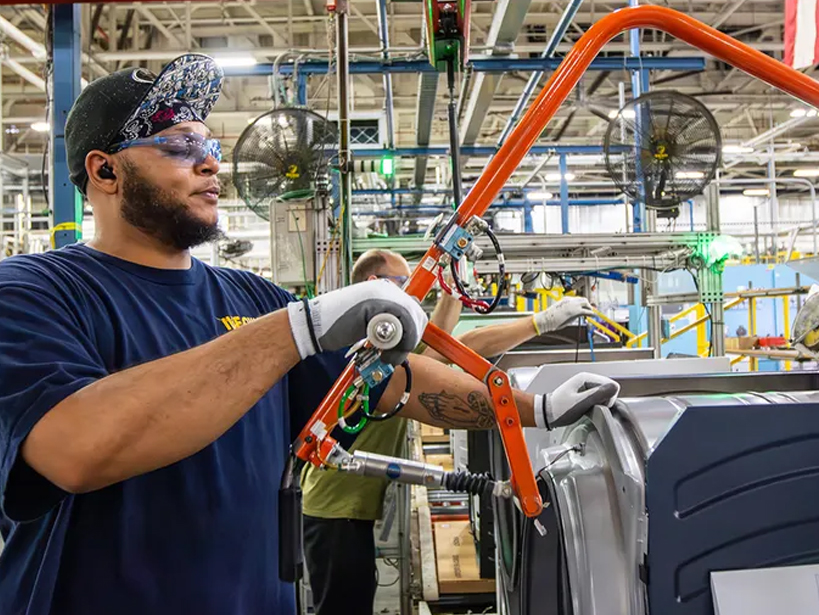
GE Appliances is committing more than $3 billion over five years to expand U.S. manufacturing, a bet that more production at home can blunt tariff pain and win share in categories like air conditioning, water heating and laundry. The Haier-owned maker of refrigerators and ranges says the plan will add 1,000 jobs across five states and upgrade 11 plants with new automation and equipment.
This is not a one-off splash of capital. GE Appliances says that by the time the new plan wraps, it will have poured $6.5 billion into its U.S. plants and distribution network since 2016, when Haier bought the business from General Electric. The company is explicit about the why now. Tariff policies have raised the cost of importing components and finished goods, pushing multinationals to evaluate what truly needs to be made closer to the customer, and GE Appliances is choosing to scale up in Kentucky, Alabama, Georgia, Tennessee and South Carolina. Moving more assembly and component work back to the U.S. also shortens supply lines that were stretched thin during the pandemic era, a practical advantage when demand whipsaws and transportation snarls pop up.
The company’s first tranche of projects includes a previously announced $490 million expansion at its Louisville headquarters complex to build advanced washers, including the GE Profile UltraFast Combo and the UltraFresh front-load line. That site is already one of the largest appliance campuses in the country, and the new laundry investment is slated to create 800 jobs in Kentucky alone according to state and company statements. Executives frame the broader five-year plan as a continuation rather than a pivot, arguing no U.S. appliance maker has spent more domestically over the past decade. Whether that superlative holds in every category is debatable, but the scale here is plain and it fits a wider trend of manufacturers recalibrating footprints to balance cost, resilience and policy incentives.
Jobs and local impact matter beyond headline numbers. GE Appliances reports contributing tens of billions to the U.S. economy through wages, supplier spending and taxes, with thousands of direct roles in Kentucky and broader ripple effects across the supply base. New automation often spurs anxiety about headcount, but the company says the plan nets out to more hiring as it expands product lines and raises output. The test will be execution: modernizing 11 facilities while keeping production humming is a heavy lift, and demand cycles in big-ticket appliances can be unforgiving if interest rates stay elevated or housing cools.
The ownership question inevitably comes up. GE Appliances operates as a U.S. business under Haier, the Chinese home-appliance giant listed in Shanghai and Hong Kong, and it sells under brands familiar to American households: GE, GE Profile, Monogram, Café, Haier and Hotpoint. That corporate setup allows access to Haier’s global engineering and procurement while keeping manufacturing decisions responsive to U.S. policy signals and consumer tastes. It also means the company has to navigate geopolitical currents while committing real dollars to U.S. plants, a balancing act that many globally owned American manufacturers now face.
There is a strategic through-line to watch. Appliances have become a features race, from energy-efficient heat pump water heaters to connected laundry that can wash-and-dry in one drum, and winning those categories requires both engineering investment and reliable North American capacity. GE Appliances is placing a sizable marker that the next phase of growth will be built in the U.S., closer to end buyers and retailers, with shorter feedback loops between design, production and the showroom floor. In practical terms, that could mean faster product refreshes, less inventory in transit, and more resilient delivery during peak seasons, all of which matter to big-box partners and contractors alike.
If the plan lands, competitors will feel it. Carrier and others have already flagged new U.S. investments, and the race to localize supply chains is accelerating as incentives and tariffs reshape the calculus. For Louisville and the other plant communities, the payoff is straightforward: more skilled jobs, refreshed factories and deeper supplier ecosystems that are harder to uproot once capital is sunk. For GE Appliances, the risk is committing billions into a cyclical category, but management seems to be betting that proximity and control will outweigh the cost premium of building at home.
