
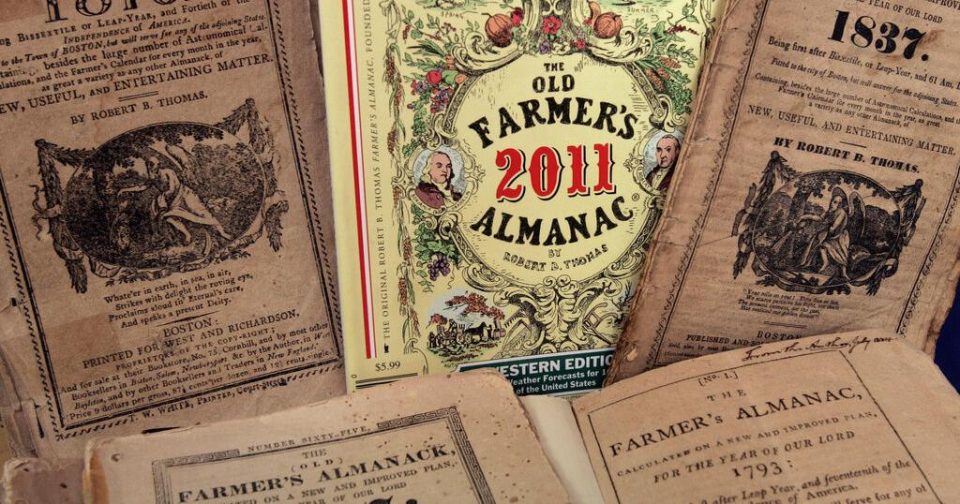
The Farmers’ Almanac, a publication that has been a part of American culture for over two centuries, will release its final edition in 2025. This closure marks the end of a significant chapter in print media history and highlights the considerable challenges faced by the publishing industry in the digital age.
The Farmers’ Almanac was more than just a collection of weather forecasts and gardening tips. It was an annual ritual for many households, reflecting a blend of tradition, folklore, and practical advice. Its longevity was a testament to its relevance and the connection it fostered with its readership over generations. However, the almanac’s closure signals how even the most enduring print media are struggling to adapt in a landscape transformed by the internet.
Since the rise of the internet, traditional publishing has undergone profound changes. The digital revolution fundamentally altered how people access information. Print media faced steep declines in circulation as readers increasingly turned to online sources offering instant content. This shift has also redirected advertising revenues, once the lifeblood of print publishing, toward digital platforms dominated by major technology companies. The result has been intense pressure on publishers to redefine their business models amid falling print revenues and evolving consumer expectations.
Artificial intelligence (AI) is now emerging as a game changer in content creation and publishing economics. AI tools can generate written material, assist with editing, and optimize distribution, leading to significant efficiencies in production. These technological advances reduce reliance on traditional editorial roles and challenge the longstanding human-centric model of publishing. While AI can help lower costs and increase output, it raises important questions about creativity, quality, and the value of human judgment in content development.
From an economic perspective, AI-driven content production exerts downward pressure on pricing and profitability. The capacity to create vast amounts of content at low cost risks commoditizing published work, making it harder for publishers to maintain distinctive voices or charge premium prices. Conversely, AI also enables more refined audience targeting and personalized engagement, potentially opening new monetization avenues through data-driven advertising and subscription innovations.
The Farmers’ Almanac’s journey from its 19th-century origins to its final 2025 edition illustrates the history of media evolution itself. It endured waves of disruption from radio and television to the digital shift, serving as a cultural touchstone along the way. Yet, the combined forces of internet competition and emerging AI technologies have created conditions that ultimately proved unsustainable.
Looking ahead, the publishing industry continues to adapt by blending traditional editorial strengths with new digital tools and AI capabilities. Many publishers are experimenting with hybrid models to meet changing consumer habits while seeking to maintain quality and trust. The closure of the Farmers’ Almanac stands as a poignant reminder of the ongoing tension between preserving legacy and embracing innovation.
The legacy of the Farmers’ Almanac will endure beyond its print pages. It serves as both a symbol and a case study of the resilience and transformation required in an industry at a crossroads. As AI and technology reshape content creation and distribution, publishers face the complex challenge of balancing efficiency with the human elements of storytelling and editorial insight.
